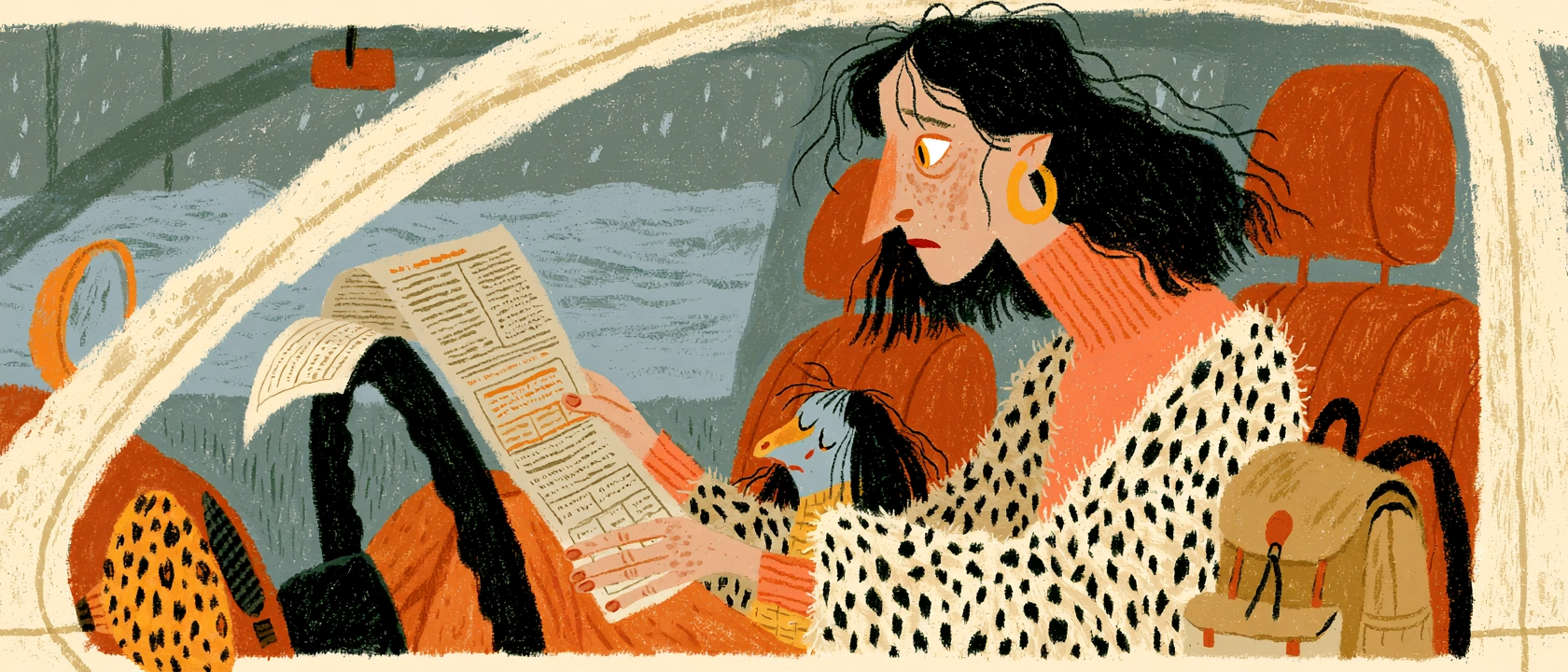
You notice something. A headache that's been there for two days. A mole you don't remember seeing before. A heartbeat that felt slightly off for about four seconds.
And then your brain does that thing.
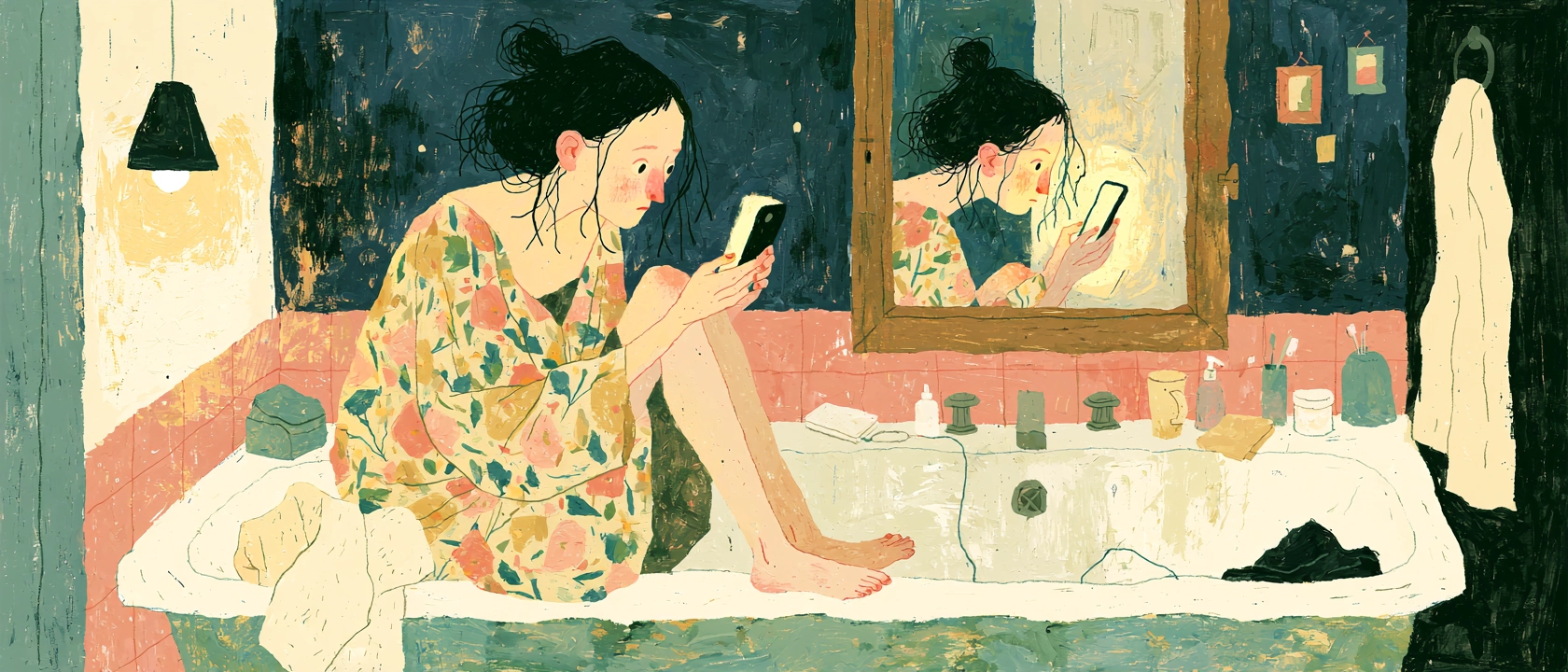
The Googling. The checking. The replaying. The asking your partner if they think it's serious, getting reassurance, feeling better for twenty minutes, and then wondering if maybe they were just saying that to make you feel better. So you check again.
If this loop is familiar, you've probably already wondered: is this health anxiety, or is this obsessive-compulsive disorder (OCD)? They can look almost identical from the outside. But the engine underneath is different, and that difference matters enormously for what actually helps.
Health anxiety is persistent, excessive worry that you have or are developing a serious illness, despite medical reassurance to the contrary, or without symptoms that warrant the level of concern.
The clinical term in the Diagnostic and Statistical Manual of Mental Disorders, fifth edition (DSM-5) is Illness Anxiety Disorder. The fear is real. The distress is real. The suffering is real. What's disproportionate is the interpretation: a headache becomes a brain tumor, a stomachache becomes cancer, a heart flutter becomes the beginning of something catastrophic.
The anxiety tends to organize itself around information-seeking. You Google. You read forums. You compare your symptoms to lists. You book a doctor's appointment, get a clean bill of health, feel relief, and then, a few weeks later, start to wonder if they missed something.
According to the Anxiety and Depression Association of America, health anxiety affects roughly 4–5% of the general population, though many more people experience subclinical versions that still significantly disrupt daily life.
Health OCD, sometimes called somatic OCD or illness OCD, is OCD where the primary theme is health, illness, contamination, or bodily sensations. The obsessions sound similar to health anxiety: What if I have cancer? What if I'm contagious? What if I ignored a symptom that mattered?
But OCD has a structure that health anxiety doesn't always have. It runs on a cycle:
That last part is the tell. The relief never holds. The reassurance that worked today stops working by tomorrow. The search that resolved one fear surfaces three more. Each time the cycle runs, it resets at a higher intensity.
In health OCD, uncertainty itself has become intolerable, and every compulsion is an attempt to buy a certainty the brain can never actually deliver.
Here's the frame that clarifies it most cleanly:
Health anxiety fears illness. The goal is to find out you're okay, and if you get convincing enough reassurance, you feel genuinely better, at least for a while.
Health OCD fears uncertainty. Even when the doctor says you're fine, the brain comes back with: But what if they're wrong? What if they missed it? What if I didn't describe the symptom correctly? The reassurance solves nothing for long because certainty was never actually possible, and some part of the brain knows it.
In practice, the distinction often shows up in how reassurance lands. If a clean test result genuinely relieves you for weeks, that leans toward health anxiety. If you walk out of the doctor's office feeling okay and find yourself back on WebMD by that evening, that leans toward OCD.
Another clue: the internal rule. Health OCD often comes with a hidden "if-then" structure: If I don't check right now, something bad will happen and it will be my fault. There's a driven, non-negotiable quality to the compulsion. It doesn't feel like a choice. It feels like pulling a fire alarm.
Health anxiety vs health OCD at a glance
| Health anxiety | Health OCD | |
|---|---|---|
| What it fears | Having or developing a serious illness | Not being certain: "What if they missed it?" |
| After a clean test result | Real relief that can last for weeks | Relief for minutes or hours, then new doubts |
| The urge to check | Worry tied to a symptom | Driven and non-negotiable, often with an "if I don't check, something bad will happen" rule |
| Common behaviors | Googling, doctor visits, and sometimes avoiding doctors | Googling, body checking, asking for reassurance, mental reviewing, doctor-shopping |
| Treatment that leads | CBT with attention retraining | ERP |
This is where a lot of people get tripped up. When they think OCD, they picture handwashing or checking stoves. Health OCD compulsions look different, and they're easy to confuse with "just being responsible about your health."
Common health OCD compulsions include:
The International OCD Foundation draws a useful distinction: seeking medical care when you have a genuine, new symptom is appropriate. The compulsive version is characterized by urgency, repetition, and the fact that reassurance provides only temporary relief before the doubt resurfaces.
For a deeper look at how mental compulsions specifically work in OCD, including the ones that happen entirely inside your head, our post on mental compulsions in OCD covers this in detail.
This is the counterintuitive insight that changes how people understand their own cycle.
Reassurance feels like the solution. You're scared, you get reassurance, you feel better. Of course you seek it. It works, briefly.
But in OCD, reassurance functions as a compulsion. Each time you seek it and feel relief, you teach your brain: the only way to feel okay about this uncertainty is to get external confirmation. The brain learns the lesson perfectly. So it keeps creating the need.
Over time, the reassurance has to come faster, from more sources, in more forms, to produce the same effect. What started as asking your partner once becomes asking twice, then calling the nurse line, then Googling, then asking again. The brain got trained, and it trained well.
This is also covered in our post on why reassurance-seeking is a compulsion in OCD, which goes deeper on how this specific loop works and why stopping it is so central to treatment.
No checklist replaces a proper clinical assessment. But these patterns can help you see which direction you're leaning.
Patterns that lean more toward health anxiety:
Patterns that lean more toward health-related OCD:
And sometimes, honestly, it's both. Anxiety and OCD frequently co-occur, and the line between them blurs. A good therapist is working out what's maintaining the loop, more than which label to hand you.
This deserves to be said plainly, because a lot of people spend years managing rather than treating.
Without treatment, health anxiety and health OCD tend to expand. The feared illness categories grow. The compulsions take more time. The things you avoid to protect yourself from triggering the cycle multiply. Relationships get strained: partners who've been asked "but do you really think I'm okay?" hundreds of times start to withdraw. Avoidance of doctors can lead to genuinely missing things that needed attention.
The brain learns whatever lesson you teach it consistently. If every spike of uncertainty is answered with a compulsion, the brain learns: uncertainty equals emergency. The alarm gets more sensitive. The cycle gets more entrenched.
The good news: it also works in reverse. The brain can learn new lessons. That's what treatment does.
This is where the health anxiety / health OCD distinction becomes practically important. They respond to overlapping but meaningfully different approaches.
Exposure and Response Prevention is the most evidence-supported treatment for OCD of any subtype, including health OCD. The basic premise: you gradually face the feared uncertainty without doing the compulsion. You sit with "I don't know if I'm okay" without Googling, checking, or asking for reassurance.
That sounds brutal. In practice, it's graduated and collaborative: you build a hierarchy with your therapist, starting with lower-anxiety exposures and working up. And the result, over time, is that the brain learns what it couldn't learn while you were compulsing: I can tolerate uncertainty. I don't need certainty to function.
Cognitive Behavioral Therapy for health anxiety focuses on examining the interpretations you make about sensations and symptoms, building tolerance for physical discomfort without catastrophizing, and reducing the body-checking and avoidance behaviors that maintain the anxiety loop.
Attention retraining helps because health anxiety often involves hypervigilant body-monitoring: once you're scanning for a sensation, you will find it, and finding it confirms the fear. Learning to redirect attention is a learnable skill, not just willpower.
At the core of both treatments is the same hard thing: learning to function without the certainty your brain keeps insisting it needs. That's uncomfortable. It takes practice. And it's the work that actually moves the needle, because no amount of information, reassurance, or checking has ever successfully delivered permanent certainty.
It never will. Absorbing that fully is what starts to free people from the loop.
Yes. They frequently co-occur, and OCD and anxiety disorders are known to overlap significantly. A thorough assessment can help identify which mechanisms are most active and which treatment approach to prioritize. In practice, ERP tends to address both, because the compulsion-reduction component helps regardless of whether the underlying driver is more anxiety-based or OCD-based.
Very common. Many people with health OCD have never considered OCD as a possibility: they think of themselves as "health-anxious" or "a worrier" or "just being careful." The OCD label requires a clinician, but the pattern (obsession, compulsion, temporary relief, return of doubt) is recognizable once you know what to look for. If you've been told you have health anxiety but treatments haven't worked, OCD is worth exploring.
No. Avoiding doctors entirely is avoidance, which is itself a compulsion. Appropriate medical care stays; what changes is the driven, repetitive reassurance-seeking around it. Your therapist can help you identify what "appropriate" looks like for your specific situation, including how to attend medical appointments without turning the visit into a compulsion.
Start with honesty: "I know the reassurance-seeking is hard on you. I'm working on it, and I could use your help, but differently than how I've been asking." Then learn together what "not providing reassurance" looks like in practice, because partners who care usually find this hard. A therapist can coach both of you on this. It's a common and important part of OCD treatment.
The IOCDF describes ERP for OCD as typically taking several months of weekly sessions before most people see meaningful symptom reduction, with complex or long-standing cases often taking longer. CBT timelines for health anxiety are similar. Progress isn't linear: there are usually harder weeks in the middle of treatment before things genuinely shift. The earlier you start, the less entrenched the patterns tend to be.
If the checking, Googling, and reassurance-seeking is taking up significant time in your day, or if the loop has been running for months or years without getting better on its own, that's the signal.
You don't have to wait until it's completely unmanageable. Most people who get effective treatment wish they'd come in sooner.
Layers Counseling Specialists is based in Plano, Texas, serving adults and families across the DFW area, including Frisco, Allen, McKinney, and Richardson. Our OCD specialty includes ERP-trained clinicians who work with exactly this kind of loop.
Schedule a consultation. We'll help you figure out what's driving the loop and build a plan to interrupt it.
This article was written by Karla Pineda, LPC, Executive Director at Layers Counseling Specialists. Karla is an IOCDF-registered ERP therapist with training in Rumination-Focused ERP, and works with OCD across all subtypes.
Last reviewed: August 2026
This article is for educational purposes and is not a substitute for professional mental health care. If you or someone you know is in crisis, call or text 988 (Suicide & Crisis Lifeline) or text HOME to 741741.
Our Plano therapists specialize in OCD, anxiety, ADHD, autism, ARFID and trauma, in person or online anywhere in Texas. Every clinician starts with a free 15-minute consultation, so you can see whether it feels like a fit before you commit.
ocd
OCD
ocd