By Karla Pineda, LPC · Last reviewed: September 2026
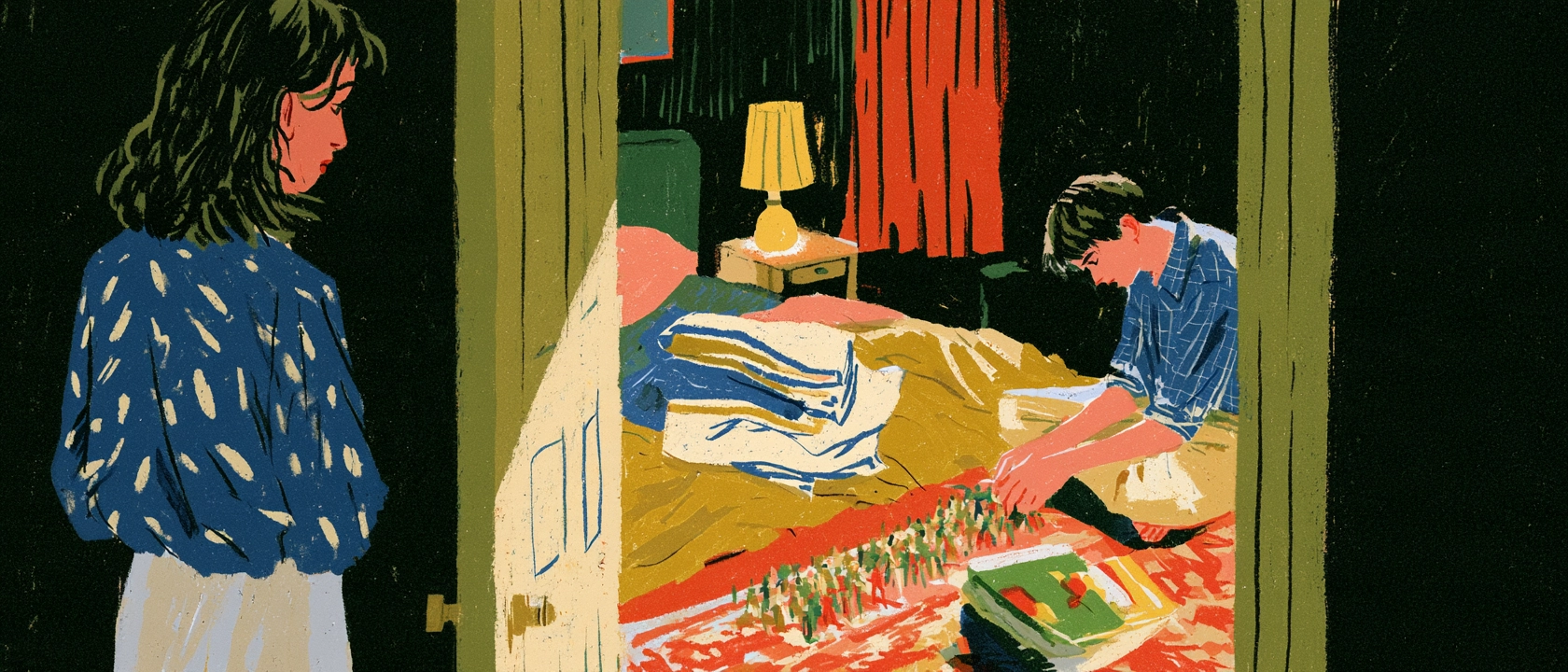
"Just answer me one more time. I promise I'll drop it."
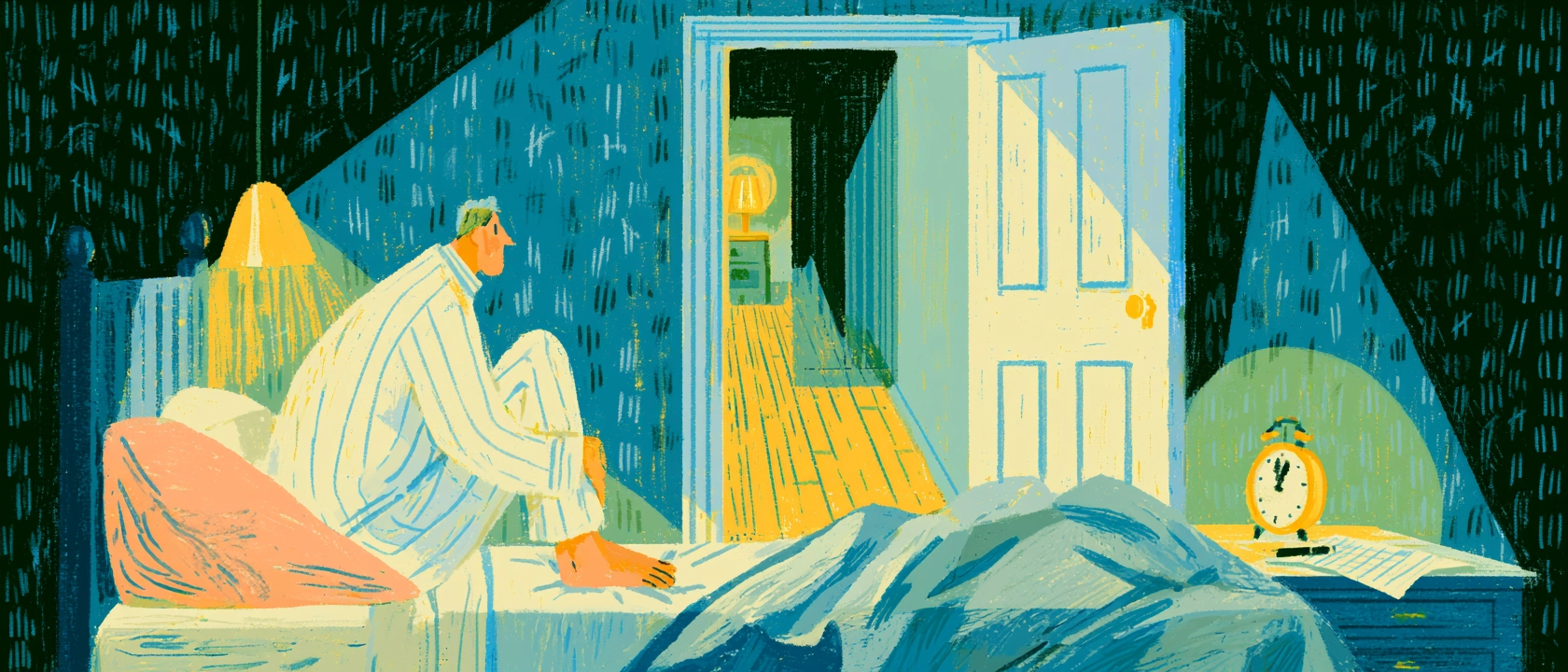
If you live with obsessive-compulsive disorder (OCD), you've said some version of that sentence. Maybe to your spouse at midnight. Maybe to Google, forty tabs deep. Maybe to a therapist who answered the exact same question last Tuesday.
You meant it every time. OCD is the reason you couldn't keep the promise.
Reassurance-seeking in OCD is a mental compulsion: a repeated effort to get certainty, safety, or confirmation in response to an obsessive thought. Like checking or washing, it lowers anxiety for a short time while strengthening the obsession over the long run. The International OCD Foundation classifies it alongside other compulsions for exactly that reason.
Some of it is easy to spot. A lot of it hides in plain sight, blended into normal conversation, which is why it belongs with the other compulsions you can't see.
Common forms include:
The tell is repetition. Asking a question once and accepting the answer is information-seeking. Asking the same question in six costumes is a ritual.
Think of a mosquito bite. Scratching it produces genuine relief. Nobody scratches for fake reasons. And every scratch makes the bite itch longer and harder than if you'd left it alone.
Reassurance is the scratch. OCD runs on intolerance of uncertainty, and when an obsessive thought fires, your brain demands total certainty that nothing bad is true or will happen. An answer delivers that certainty for a moment, and your anxiety drops.
The drop is the problem. The American Psychological Association explains that compulsions maintain OCD by cutting off the anxiety before it can resolve on its own. Your brain draws a simple conclusion: that thought was a real threat, and the answer saved me. So it flags the thought as dangerous and sends it back, louder.
In our practice, clients can usually name the exact moment an answer wears off. One woman told me she felt relief for the length of the drive home. By the garage, the doubt had already found a new angle.
Most people assume they just haven't found the right reassurance yet. A better explanation, a more qualified expert, a more certain-sounding spouse.
Certainty from reassurance has a shrinking half-life. The first answer holds for a day. The tenth holds for an hour. Eventually an answer barely survives the walk to the kitchen. The quality of the answer was never the variable. What changed is your brain's tolerance for the question staying open, which shrinks a little with every dose.
Every answer you collect teaches your brain that the question was worth asking.
This is also why loving families get pulled in so deep. Answering feels like kindness. But when a spouse or parent becomes the designated certainty source, they've been recruited into the ritual, and the same pattern shows up in safety behaviors that keep social anxiety running.
You stop reassurance-seeking the way you'd stop any compulsion: gradually, by letting the question stay unanswered a little longer each time until your brain stops treating it as an emergency. Nobody does this perfectly on day one, and nobody needs to.
Answering feels like the kind thing to do. A kinder long-term move is agreeing on a plan together, in a calm moment, and then using warm words that don't hand over certainty.
| Instead of saying | Try saying |
|---|---|
| "No, you're not a bad person. I promise." | "I love you, and that sounds like an OCD question." |
| "Yes, you locked the door. I watched you." | "I'm not going to check that one with you. Want to take a walk while it passes?" |
| "I've told you a hundred times!" | "This is hard. I'm right here while you sit with it." |
| "Fine, one last time." | "We agreed I'd help you practice. Now, or in ten minutes?" |
Make this change together, with the person's agreement. Pulling reassurance away as a surprise feels like punishment, and it usually backfires. If the whole household has been pulled into the pattern, our post on how families step back from OCD accommodation walks through doing it as a team.
OCD expands. The National Institute of Mental Health notes that compulsions reinforce fear responses rather than resolving them, and over time three things tend to happen.
The list of things that "need checking" grows. Your confidence in your own judgment erodes, because you've outsourced it one answer at a time. And relationships strain under the weight, since the people who love you are stuck choosing between watching you suffer and feeding the cycle.
This is the disorder doing what it's built to do, and it happens to strong, capable people all the time. Which is exactly why treatment targets the pattern, and why the pattern responds so well when it's targeted.
The gold-standard treatment is Exposure and Response Prevention (ERP). As an IOCDF-registered ERP therapist, I spend a lot of sessions on this exact compulsion.
In ERP, we practice letting the question stay open. You learn to notice the urge to ask, ride out the anxiety spike, and discover firsthand that it falls on its own. We also give families a script, so "I love you, and that sounds like an OCD question" can replace the four-hundredth answer.
For clients whose obsessional doubt stays sticky, we also offer Inference-based cognitive behavioral therapy (I-CBT), a treatment that targets the doubt itself rather than the compulsions. Our team treats adolescents and adults, in English and in Spanish.
No. Asking a question once, getting an answer, and moving on is healthy information-seeking. It becomes a compulsion when the question repeats, when the answer stops satisfying, and when the asking is driven by an obsessive fear rather than a practical need.
Because it works, briefly. Each answer lowers anxiety for a moment, and that relief teaches your brain the obsessive thought was a real threat that needed handling. Obsessive-Compulsive Disorder (OCD) then sends the thought back more often and asks for certainty again, sooner.
It varies, and progress usually comes in steps. Most people notice the urges easing well before they fade. With Exposure and Response Prevention (ERP), the therapy that practices facing a fear without doing the ritual afterward, most people see real change over a few months of steady practice.
Yes, and for many people it's the biggest one. Search engines are a certainty dispenser with no closing time. If you're re-searching the same fear in new wordings, the search itself is the compulsion.
Consider getting support if:
At Layers Counseling Specialists in Plano, Texas, we provide evidence-based OCD therapy for teens and adults across the DFW area, including families in Frisco, and online anywhere in Texas. If reassurance-seeking is running your days, reach out today.
The promise you keep making, "one more time and I'll drop it," is a promise ERP finally lets you keep. You drop it the day an open question stops feeling like an emergency.
This article is for educational purposes and is not a substitute for professional medical advice. If you or someone you know is in crisis, call or text 988 (Suicide & Crisis Lifeline) or text HOME to 741741.
Our Plano therapists specialize in OCD, anxiety, ADHD, autism, ARFID and trauma, in person or online anywhere in Texas. Every clinician starts with a free 15-minute consultation, so you can see whether it feels like a fit before you commit.
ocd
OCD
ocd