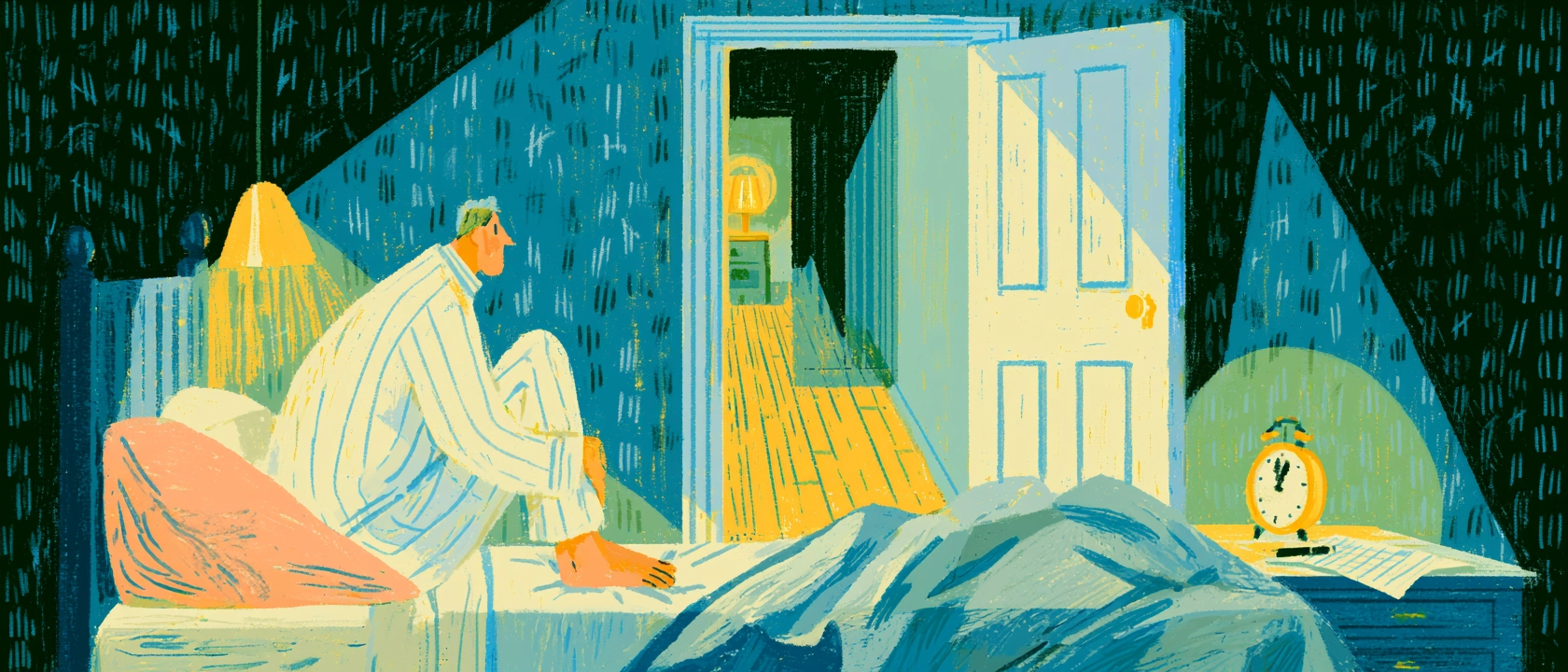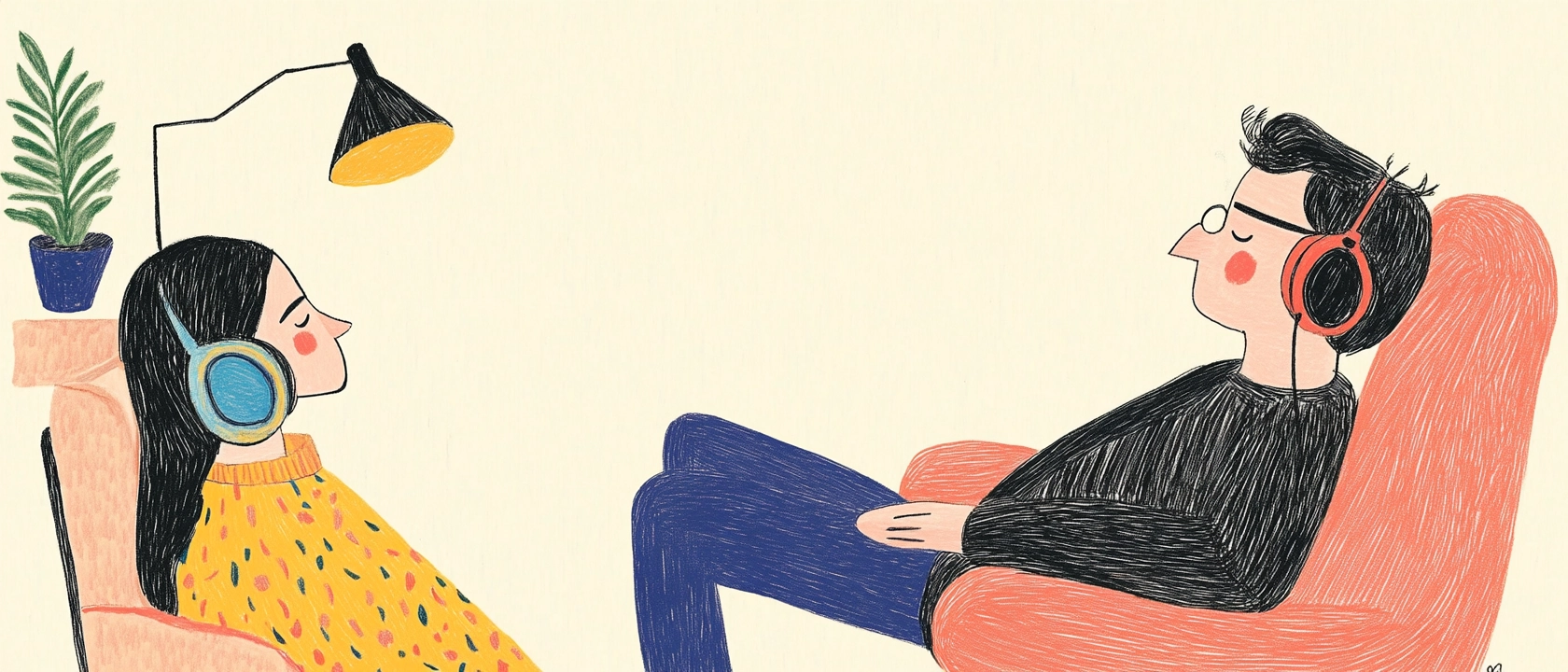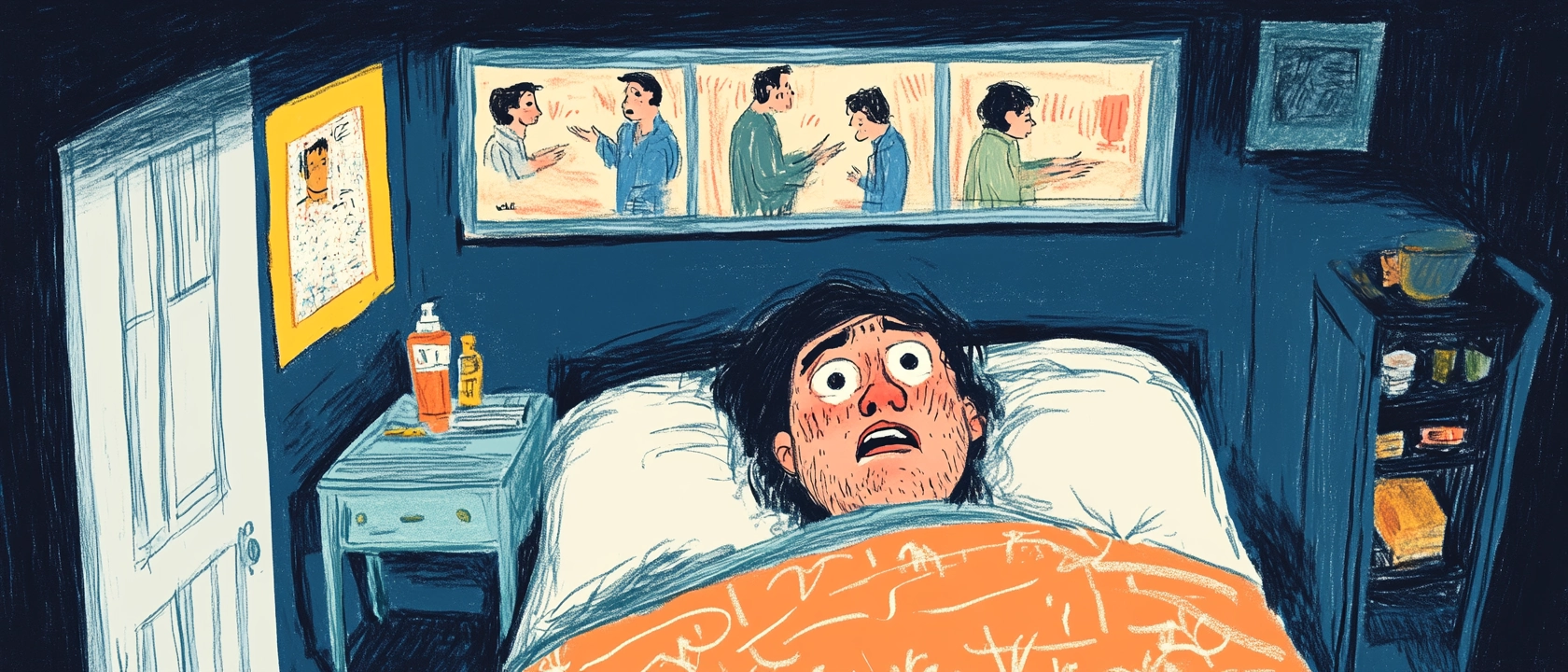
If I fall asleep right now, can I still get six hours?
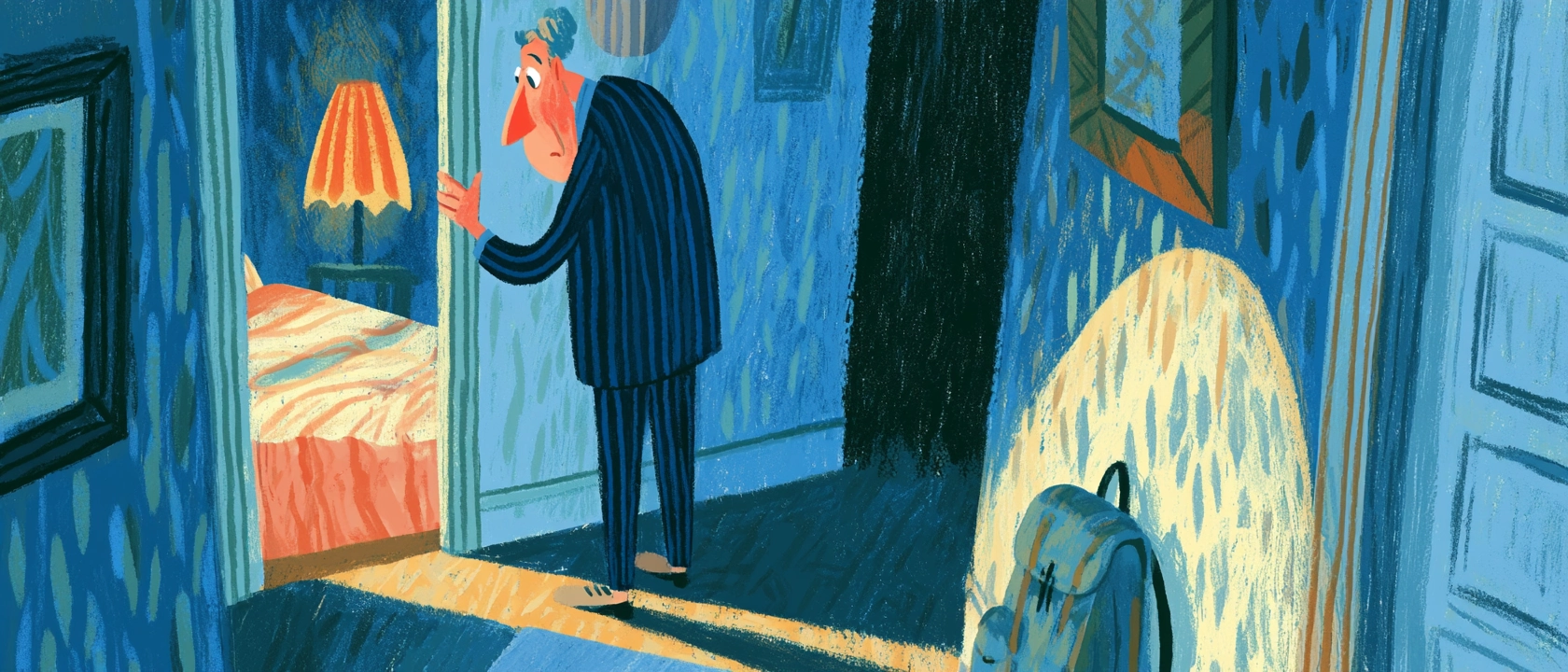
The math again, same as last night. Five and a half if the mental review takes another round. The door is locked. You checked. But the question is back, and at 1:47am the house is still enough to hear it.
OCD works the night shift. When everything else clocks out, it clocks in. If your worst hours are the ones everyone else spends asleep, there's a reason, and there's a way out.
OCD tends to worsen at night because distraction disappears, mental fatigue lowers your ability to dismiss intrusive thoughts, and stillness gives rumination room to run. Research also shows that sleep loss itself intensifies obsessions and compulsions the next day, creating a cycle where OCD and poor sleep feed each other.
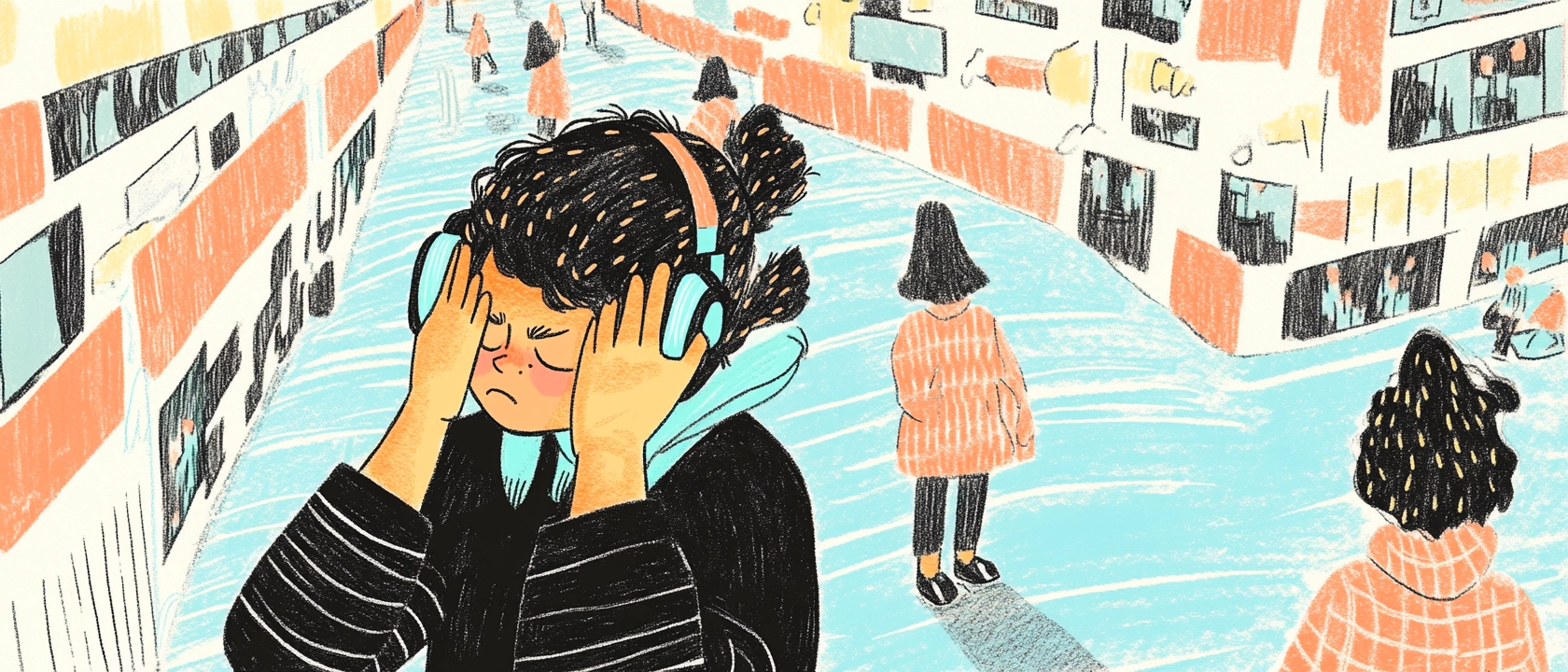
Think about what daytime does for you. Meetings, traffic, other people's voices, the next thing on the list. Your brain has competition all day long, and intrusive thoughts have to fight for airtime.
At night, the building empties out. In an empty building, every small sound echoes.
There's more working against you than silence:
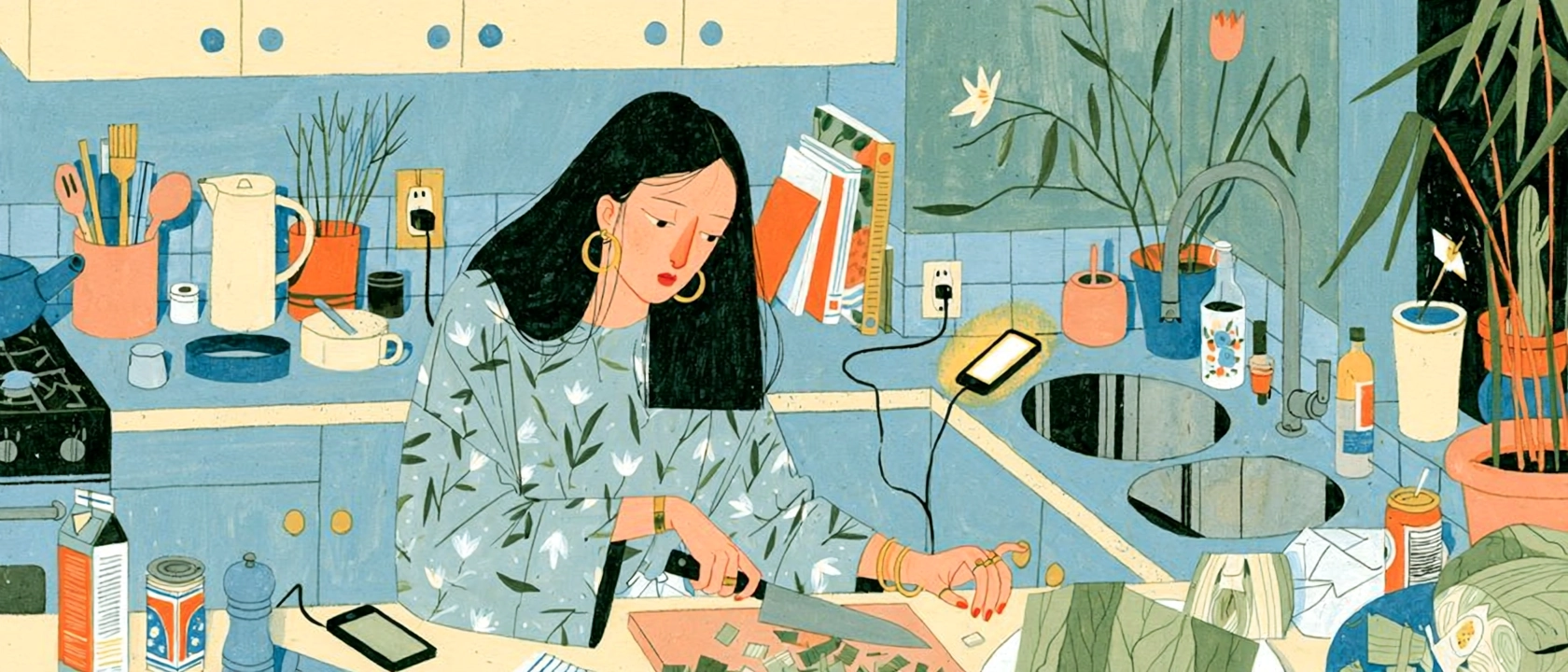
One client kept a legal pad on her nightstand. Every night she logged what she'd checked before bed: stove, locks, garage, curling iron. The list was supposed to settle the question. Instead, the ritual followed her under the covers, because the moment she finished writing, her mind asked whether she'd written it down right.
This runs in both directions, and that's what makes it a trap.
Sleep problems run high in OCD: studies consistently find poorer sleep quality and more sleep disturbance than in people without it. In one line of research, 42% of people with OCD met criteria for delayed sleep phase disorder, where your internal clock drifts hours later than the world's, compared with none of the control group.
Then comes the next day. Research published in 2017 found that disrupted sleep timing predicts less control over obsessions and compulsions the following day. Tired, you have less to spend on resisting rituals. So the rituals win more. So bedtime gets harder. So you sleep less.
Around and around.
Here's the part almost nobody tells you.
Most advice for bad sleep assumes effort helps: better routine, stricter rules, more discipline. For an OCD brain, that advice walks you straight into the disorder's favorite trap, because trying to sleep is a compulsion.
Watch what "trying" actually looks like at 1:47am. Checking the clock and recalculating. Monitoring whether you feel sleepy yet. Adjusting the pillow, the fan, the blanket until conditions are right. Running tonight against the routine that worked last Tuesday. Every one of those is certainty-seeking, the same machinery as any ritual, pointed at sleep.
For an OCD brain, "try harder to sleep" is the same trap as "just stop thinking about it."
Sleep is not a task you can complete. It arrives when you stop chasing it, which is precisely what OCD cannot stand to do. This is also why standard sleep-hygiene checklists so often disappoint people with OCD. The checklist becomes one more thing to perform perfectly, and then to review.
Untreated, the night starts running the day.
Mornings get canceled. Caffeine props up the afternoon, then sabotages the next night. Dread starts at dinner, hours before bed, because you already know what 1:47am looks like. Partners drift to the guest room. And chronic sleep loss raises the risk of depression settling in alongside the OCD.
You haven't failed at sleeping. Two conditions have learned to feed each other, and they need to be treated as the loop they are.
Exposure and response prevention treats nighttime OCD the same way it treats daytime OCD: the bedtime rituals go on the hierarchy like any other compulsion.
As an IOCDF-registered ERP therapist, I'll tell you what that looks like in practice. The checking rounds get capped, then cut. The mental review gets interrupted, on purpose, before it completes. The clock gets turned around. You practice lying in the dark with the question unanswered, which is the single hardest and most useful exposure night offers.
What actually helps is the opposite of effort. You stop performing sleep and start allowing it, and you let the anxiety about tomorrow be there without negotiating with it.
Our team at Layers treats OCD across ages and in English and Spanish, so the plan can fit the person in front of us. When insomnia has taken on a life of its own, we coordinate with medical providers on the sleep side while ERP handles the OCD side.
Yes. Research links poor and mistimed sleep to reduced control over obsessions and compulsions the next day. Exhaustion drains the mental resources you'd otherwise use to resist rituals, so symptoms feel stronger and compulsions feel more urgent. Treating the sleep problem and the OCD together works better than tackling either alone.
Distraction disappears, mental fatigue weakens your ability to let thoughts pass, and stillness invites scanning and rumination. The pressure to sleep also adds urgency, which OCD converts into fuel. By night your defenses are thinner and the stage is emptier, so the same thoughts sound louder.
Loosely, yes — a consistent wake time and a dark, cool room genuinely help. But treat them as flexible guidelines, not rules to perform. If you find yourself checking whether you did the routine correctly, the checklist has become a compulsion, and that's worth bringing into treatment.
It can be both, and often is. OCD can drive insomnia through nighttime obsessions and rituals, and insomnia can exist alongside OCD as its own condition. An evaluation with a clinician who knows OCD well can sort out which is driving which, and what to treat first.
The nighttime cycle is worth professional help if:
The legal pad is still on the nightstand. These days it holds a grocery list. Its owner still gets the 1:47am question sometimes; she just doesn't answer it anymore. She lets it sit in the dark, unresolved, and the night shift finds itself with no audience.
If your nights look like hers used to, our approach to OCD therapy in Plano treats the whole loop. Layers Counseling Specialists is based in Plano, Texas, serving families across the DFW area. You can request an appointment with our team whenever you're ready. Preferably before 1:47am.
By Karla Pineda, LPC
Last reviewed: August 2026
This article is for educational purposes and is not a substitute for professional medical advice. If you or someone you know is in crisis, call or text 988 (Suicide & Crisis Lifeline) or text HOME to 741741.