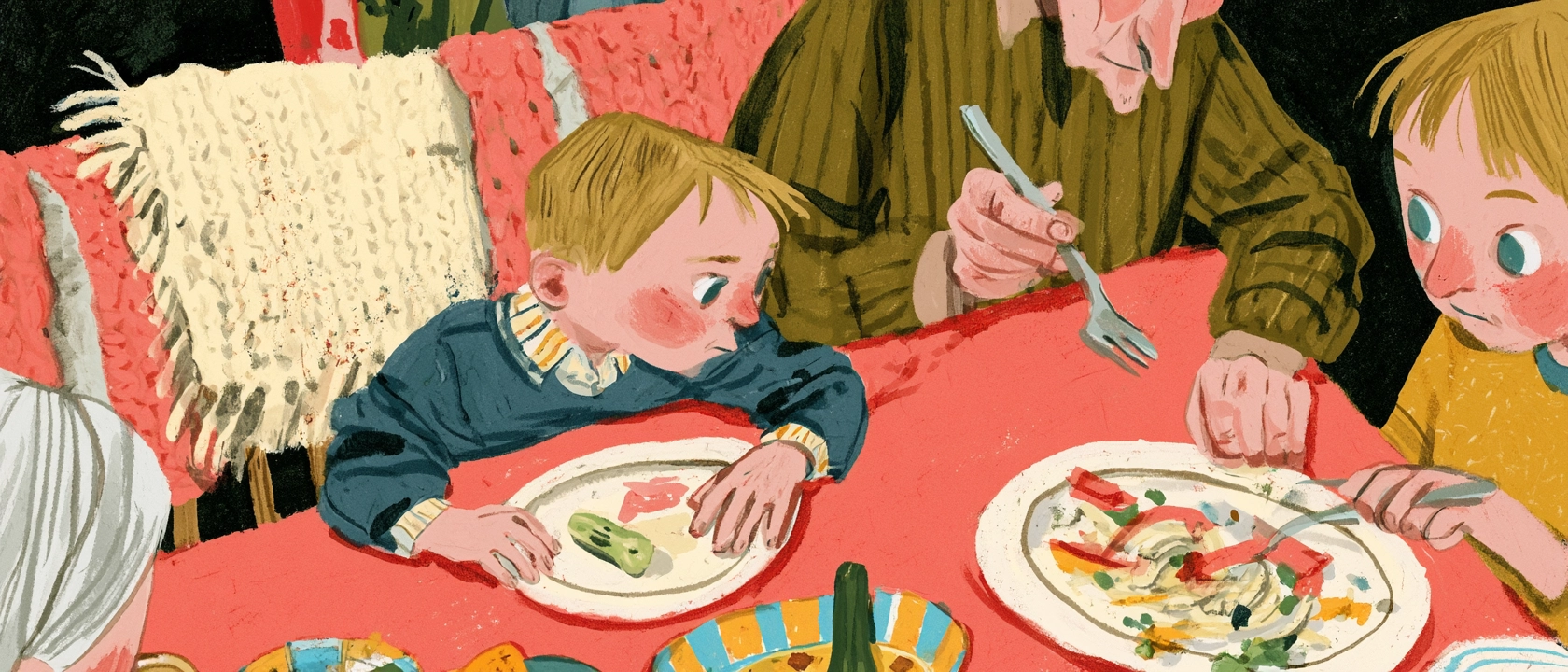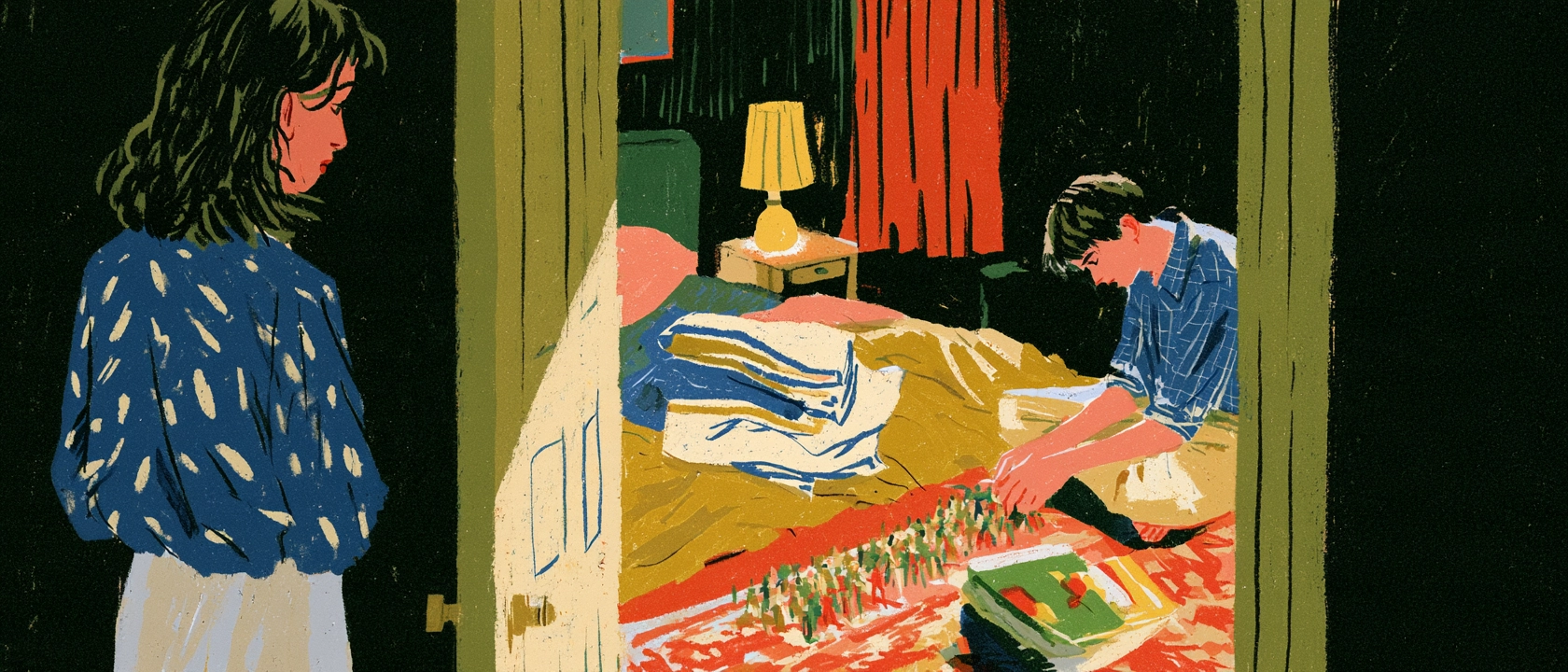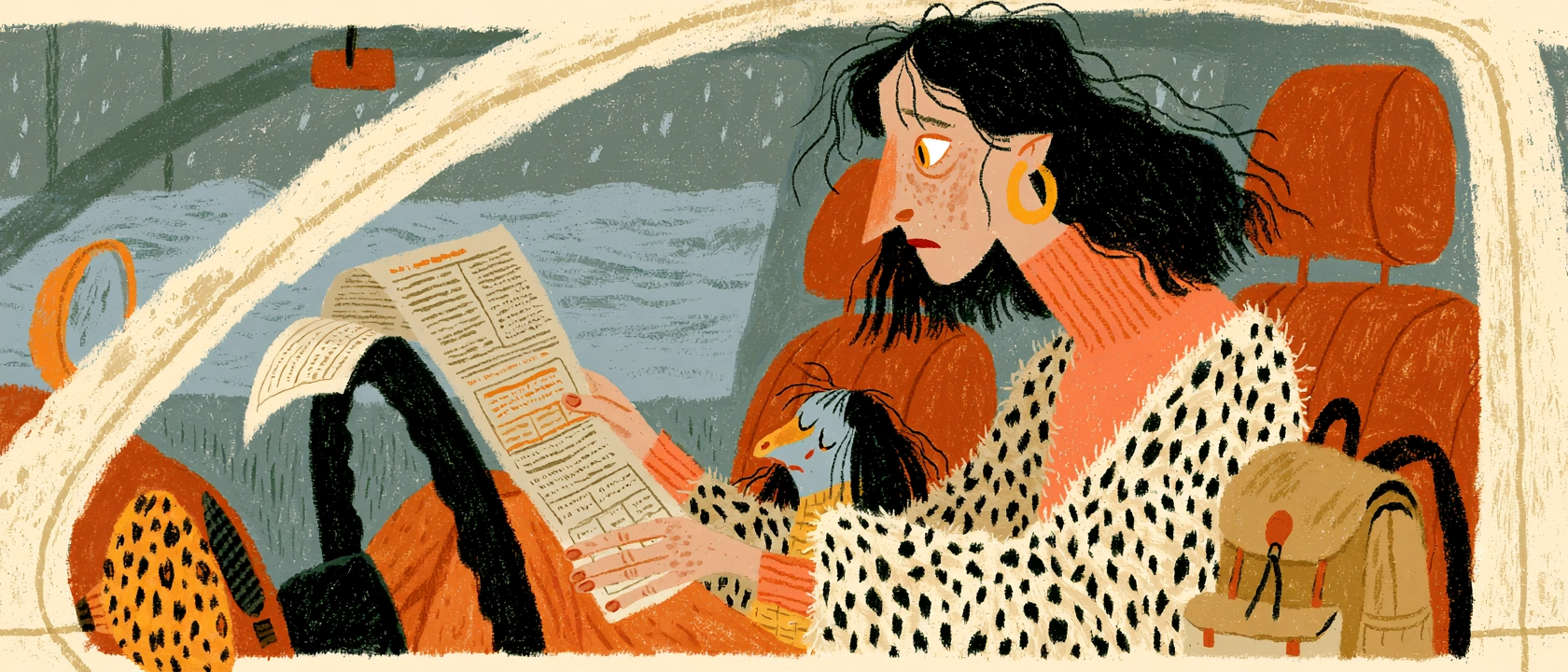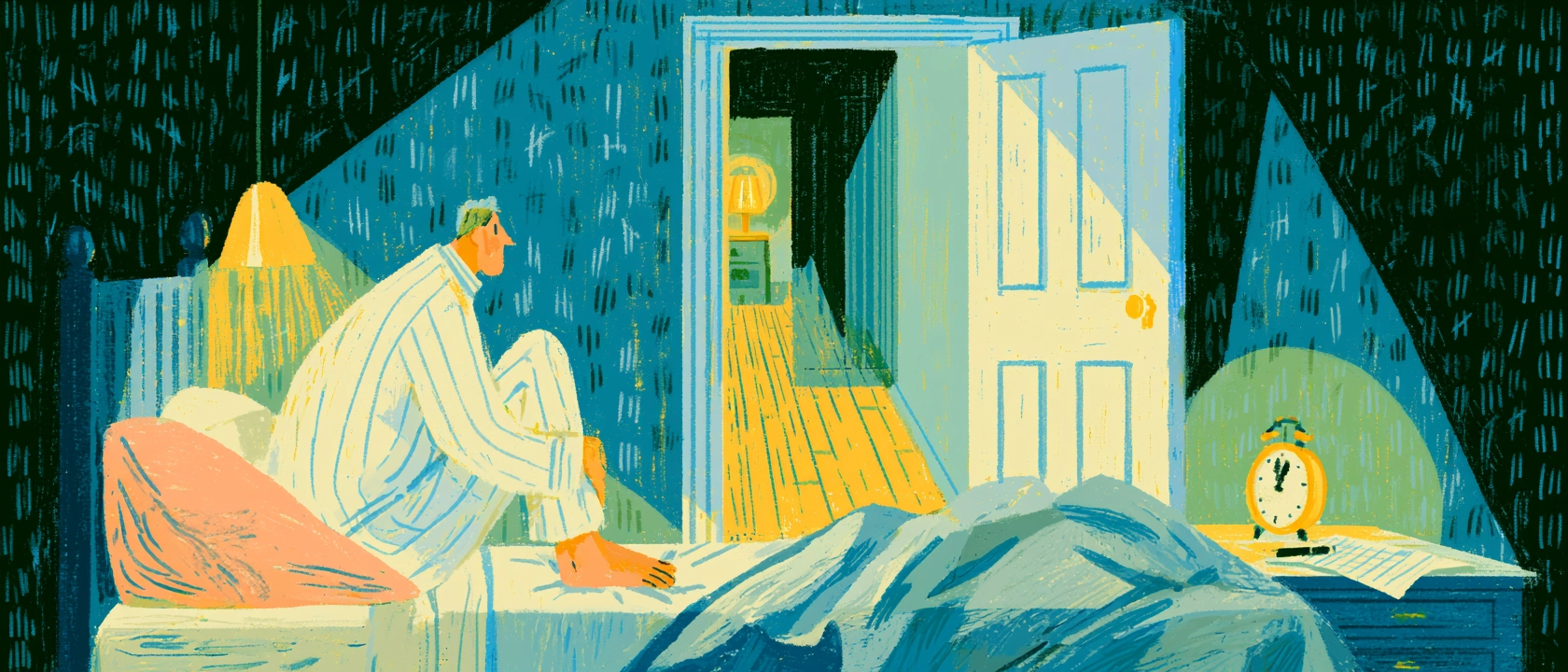
It's 2am. The baby is finally asleep on your chest.
Then a thought arrives. Sharp, violent, out of nowhere: what if I dropped her? You freeze. Your heart slams against your ribs. You hold the baby a little tighter, and somehow the holding-tighter feels like evidence of something terrible about you.
It isn't. If you've been lying awake running from a thought like that, too scared to say it to a single person, there's a name for it. It's postpartum OCD, and these are intrusive thoughts. The fact that they horrify you is the most important clue of all.
Postpartum OCD is a form of obsessive-compulsive disorder that begins during pregnancy or in the first year after birth. It centers on unwanted, intrusive thoughts, usually about the baby coming to harm, paired with compulsions that try to neutralize the fear. The thoughts feel dangerous. They're symptoms.
If you want the fuller picture of how this works when the rituals are invisible, we've written about the mental compulsions in OCD that no one can see. Postpartum OCD often runs almost entirely inside the mind.
The obsessions tend to cluster around the baby's safety.
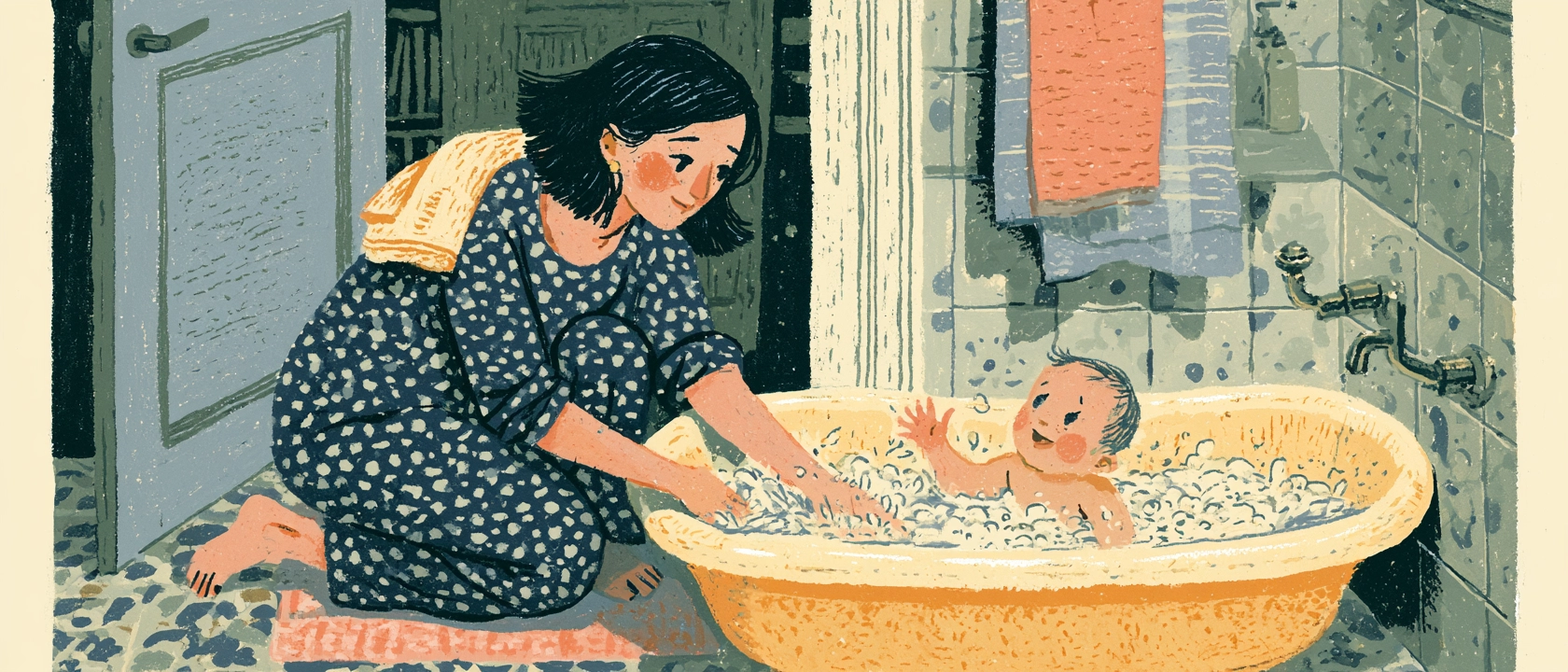
A mother pictures the baby slipping under the bathwater. She sees herself, in a flash, doing something she would never do. Some women have intrusive sexual thoughts about the baby that fill them with such revulsion they can barely breathe. These are among the most distressing and least talked-about symptoms in all of mental health, and they are well-documented features of postpartum OCD. The horror they cause is the entire point.
Then come the compulsions. The mental and physical things you do to make the fear stop, at least for a minute.
That last one is its own trap. The reassurance helps for an hour, then the doubt grows back stronger. We've written before about how reassurance-seeking works as a hidden compulsion in OCD, and postpartum OCD lives right there.
Here's what I want you to notice. Every one of those behaviors is an act of love. You avoid the stairs because you're terrified of harm. The terror and the love are the same thing.
Your brain after a baby is doing what it evolved to do: scanning for any threat to a vulnerable newborn.
Add no sleep, a flood of hormones, and the heaviest responsibility you've ever carried, and that threat-detection system runs hot. In most parents a scary "what if" flickers and passes. In postpartum OCD, it snags. The brain treats the thought as a warning that demands action, when really it's the kind of mental noise the rest of us learn to wave off.
Clinicians call these thoughts ego-dystonic. They run against everything you value, which is exactly why they land like a gut punch. The Massachusetts General Hospital Center for Women's Mental Health points to research finding that infant-harm thoughts are both common and intensely distressing, and not linked to any real risk to the baby.
Read that again if you need to. The presence of the thought tells you nothing about what you'll do.
Most advice tries to talk you out of the thoughts. Reassure you. Prove you're safe.
That's backwards, and it's a big part of why postpartum OCD gets worse instead of better. Reassurance feeds the loop. The real shift happens when you stop asking whether the thought is true and start letting it sit there without answering it at all.
The thoughts that scare you most are the strongest evidence that you are not, in fact, a danger to your child.
A person who wanted to cause harm wouldn't be lying awake, sick with dread, googling this at 2am. The dread is the diagnostic signal. It points the exact opposite direction from where your fear keeps aiming it.
Left alone, the avoidance usually spreads.
What starts as skipping bath time can become refusing to be alone with the baby at all, which chips away at the early bonding that matters so much in those first months. The shame keeps women silent, sometimes for years, convinced that telling anyone will get their baby taken away. Postpartum OCD also tends to travel with postpartum depression and anxiety, so one untreated condition drags others along behind it. None of this is a character flaw. It's an untreated illness doing what untreated illness does. And underneath all of it sits the good news: this responds to treatment, often quickly.
The treatment with the strongest evidence for OCD is ERP, short for exposure and response prevention.
ERP sounds frightening the first time you hear it, so let me be plain about what it actually is. We never ask you to do anything dangerous. We gently and gradually help you stay in contact with a feared thought while not performing the compulsion that usually follows. Over time your nervous system learns the thought isn't an emergency, and the alarm quiets on its own.
The work is teaching your brain to stop treating ordinary mental noise as a five-alarm fire.
I'm Karla Pineda, and my rumination-focused exposure and response prevention (RF-ERP) training through the International OCD Foundation means perinatal OCD is something I sit with often, with care for how tender this season already is. You can read about our approach to ERP therapy for OCD here in Plano whenever you're ready. There's no rush.
This distinction can save a life, so it's worth being very clear.
In postpartum OCD, the thoughts are unwanted and terrifying, and you have no desire to act on them. You know they're irrational even while they torment you. Postpartum psychosis is a different and far rarer condition. It can involve a loss of contact with reality, and it is a genuine medical emergency that needs immediate care. If you're frightened by your thoughts and certain you would never act on them, that fear itself points toward OCD rather than psychosis. When in doubt, a clinician can help you tell the two apart quickly.
Can postpartum OCD make me hurt my baby?
No. Postpartum OCD is defined by intrusive thoughts you don't want and won't act on. The distress you feel is the protective signal. The thought and the action simply aren't connected.
Are intrusive thoughts about my baby normal?
Far more normal than anyone says out loud. Research suggests the large majority of new parents have unwanted thoughts about something happening to the baby. They tip into a disorder only when they get stuck and start running your days.
How is postpartum OCD different from postpartum depression?
Depression centers on mood: sadness, numbness, a flat kind of hopelessness. OCD centers on intrusive thoughts and the compulsions that chase them. They often show up together, which is one reason a proper assessment matters so much.
Will I have to say the thoughts out loud in therapy?
Only at your pace. A good ERP therapist has heard thoughts like yours many times and won't flinch. Saying them out loud, when you're ready, is often the first moment the shame begins to loosen its grip.
Does postpartum OCD go away on its own?
Sometimes it eases, but more often it lingers or spreads without treatment. ERP tends to work faster than people expect. Waiting rarely helps.
It may be time to talk to someone if you notice:
You don't have to wait until it's unbearable to ask for help.
If you or someone you love is in crisis:
If any of this sounded like the inside of your own head, please know it has a name and it's treatable.
Layers Counseling Specialists is based in Plano, Texas, serving families across the DFW area with warm, evidence-based ERP therapy for OCD, including postpartum and perinatal OCD. Reach out whenever you're ready. The hardest part is usually the first sentence you say out loud. We can take it from there.
Reviewed by Karla Pineda, LPC, IOCDF-Registered ERP Therapist | Last reviewed: June 2026
Our Plano therapists specialize in OCD, anxiety, ADHD, autism, ARFID and trauma, in person or online anywhere in Texas. Every clinician starts with a free 15-minute consultation, so you can see whether it feels like a fit before you commit.
ocd
OCD
ocd