By Karla Pineda, LPC · Last reviewed: August 2026
You didn't do anything today. Nothing physically demanding. You sat at your desk, maybe ran a few errands, came home. And yet you're exhausted in a way that's hard to explain, bone-tired and brain-fried, like you ran a marathon without leaving the house.
If you have obsessive-compulsive disorder (OCD), that exhaustion is real. And it has a name.
It's what happens when your brain runs at full speed, all day, every day, fighting a war that nobody else can see.
OCD is one of the most misunderstood mental health conditions there is. Most people picture someone who washes their hands repeatedly or needs their desk arranged just so. Neat. Contained. Maybe a little quirky.
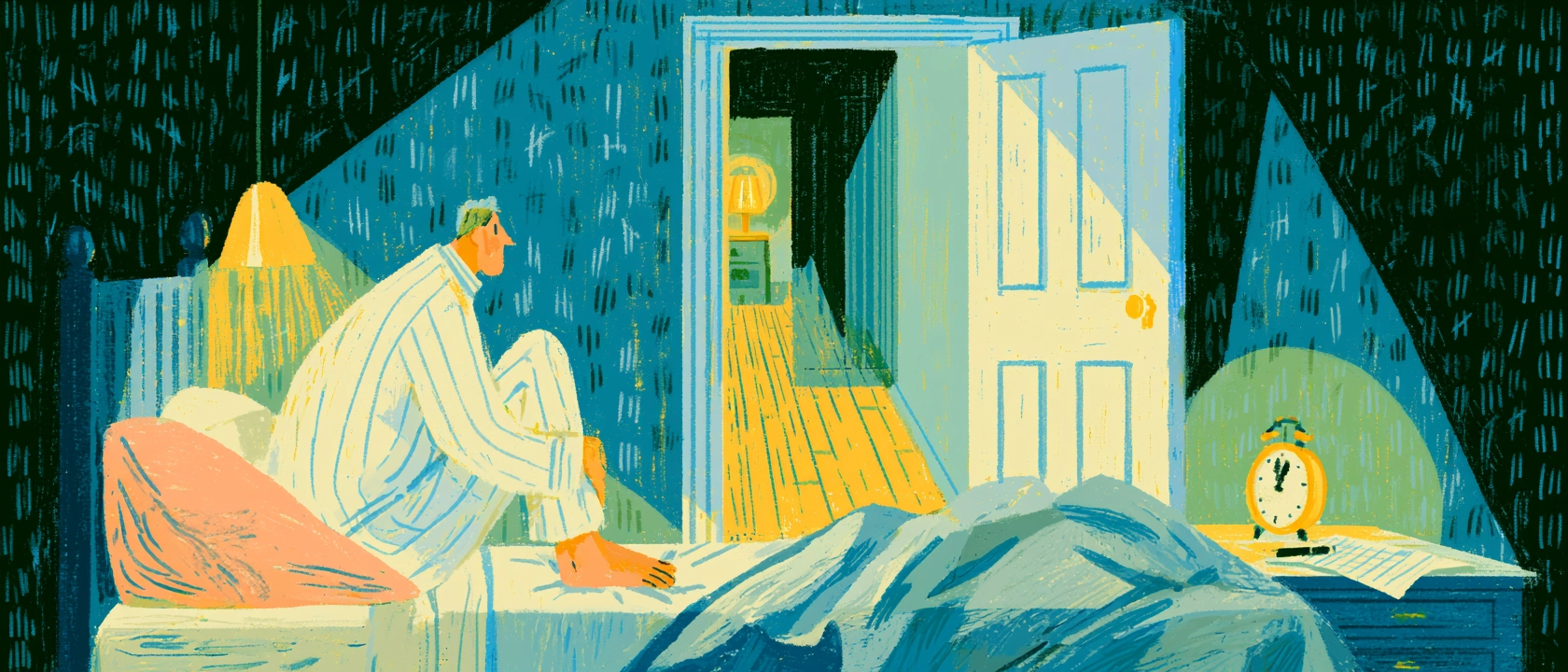
What they don't picture is someone sitting in a work meeting, apparently present, while running an internal interrogation about something they said three days ago. Or lying in bed at midnight, mentally replaying a decision from that morning to make sure, really make sure, they didn't do something wrong.
That's what OCD actually feels like for a lot of people. Relentless.
Here's what I tell clients when they first come in: OCD attaches to the content of a thought, but the disorder lives in what your brain does with it afterward.
Everyone has intrusive thoughts. Weird ones, disturbing ones, thoughts that seem to come out of nowhere. Most brains clock them, find them odd, and move on. The thought doesn't stick because the brain doesn't flag it as important.
In OCD, the brain's alarm system misfires. The thought gets flagged as urgent. As dangerous. As something that requires immediate action, whether checking, reviewing, neutralizing, or seeking certainty, before you can move forward.
So you respond to the alarm. You do the mental work the brain is demanding. And for a moment, the alarm quiets.
Then it fires again.
That cycle of obsession, anxiety, compulsion, and brief relief is the hamster wheel. Unlike a real hamster wheel, you can't see it from the outside. The person next to you on the subway has no idea you've been on it for three hours.
This is the part that doesn't make it into the pamphlets.
OCD compulsions aren't always physical. For many people, maybe most people reading this, the compulsions are entirely mental. Internal. Hidden.
Mentally reviewing a conversation to make sure you didn't say something offensive. Counting. Repeating a phrase internally until it "feels right." Running through a worst-case scenario again and again to see if you can prove to yourself it won't happen. Seeking reassurance from yourself, from Google, from people around you, about whether something is safe, okay, real, true.
This is cognitive labor. Real, exhausting cognitive labor. The International OCD Foundation describes obsessions and compulsions as consuming significant time and interfering with daily functioning, and the interference shows up first in the things that need mental bandwidth: focus, decision-making, memory, follow-through. You're not underperforming because you're not trying. A significant portion of your mental capacity is already spoken for.
The fatigue that results is the output of a nervous system that has been in near-constant hyperarousal. Your brain doesn't distinguish between a real threat and an OCD-generated one. It responds the same way, flooding your system with stress hormones and keeping you on alert. That costs energy.
I hear this in session more than almost anything else.
Someone finally names the exhaustion, how depleted they feel, how little they seem to get done relative to the effort they're putting in, how they can't explain to anyone why a normal Tuesday wipes them out. And then they apologize for it. I know I shouldn't be this tired. I haven't done anything.
What happens next is one of my favorite moments in this work.
When I explain what's actually been happening, that their brain has been running a high-intensity background process all day, that the mental checking and reviewing takes real cognitive resources, that tired is a physiological reality here, I watch something shift.
A sigh. Shoulders dropping. Sometimes tears.
The word "lazy" has been sitting on their chest for years. And it just got lifted.
The exhaustion you feel is evidence that you've been working extraordinarily hard, without the right tools, against a condition that was never your fault.
It's different for everyone, but here are the patterns I see most:
Morning dread before anything has happened. You wake up and the brain is already running. Before coffee, before your phone, the cycle is going. The day starts at a deficit.
Difficulty with ordinary decisions. OCD hijacks the brain's tolerance for uncertainty. When you've been trained by OCD to treat uncertainty as dangerous, even small decisions can feel effortful in a way that's hard to explain.
Feeling behind all the time. Working hard with OCD means working hard and managing the cycle simultaneously. Everything takes more.
Needing more recovery time than makes sense. A routine workday or a simple errand shouldn't require hours of recovery. When you've been white-knuckling through them while running an internal process the whole time, they do.
The gap between how you look and how you feel. From the outside you may look fine, functional, maybe even high-achieving. Inside, you're exhausted in a way you can't explain to anyone, which makes the isolation worse.
OCD is ego-dystonic, meaning the obsessions feel foreign to you rather than like expressions of your values. The thoughts that scare you most are often the ones most opposite to who you actually are.
And yet people carry the weight of those thoughts as though they mean something about their character. They don't.
The gold standard treatment for OCD is Exposure and Response Prevention (ERP), a structured therapy that gradually reduces the brain's alarm response by teaching it that the feared outcomes don't require the compulsions. The IOCDF identifies ERP as the first-line treatment for OCD across subtypes.
ERP builds your tolerance for uncertainty rather than eliminating it. Over time, the alarm fires less. The cycle loses its grip. The hamster wheel slows.
Progress with ERP is rarely linear, and it often feels harder before it feels easier. It works because the brain genuinely learns something new.
As an IOCDF-registered ERP therapist, this is the work I do every day.
If you've been living with the exhaustion, telling yourself you're lazy or weak or not trying hard enough, consider that you might be living with undiagnosed or undertreated OCD. And that there's a way out of the cycle.
Yes, and it's more common than people realize. The brain's stress response, which OCD triggers repeatedly throughout the day, consumes real physiological resources. Fatigue, sleep disruption, and difficulty concentrating are all recognized features of living with the disorder. The tiredness is the cost of running a high-intensity mental process all day.
Because OCD doesn't take days off. The obsessive-compulsive cycle runs whether or not you're physically active. Mental compulsions happen internally and continuously. A day that looks restful from the outside can involve hours of invisible cognitive labor.
Yes. Obsessive content competes for the same attention and working memory you need for everything else, so focus, memory, and follow-through all suffer. This is why people with OCD often feel like they're underperforming despite trying hard.
OCD-related exhaustion usually comes alongside the cycle: intrusive thoughts, the urge to check or review or seek reassurance, brief relief followed by the thought returning. If you notice that pattern accompanying the fatigue, OCD is worth exploring. A therapist trained in OCD can help differentiate.
Yes, and this is one of the most motivating things clients hear early in treatment. As ERP reduces the frequency and intensity of the cycle, the cognitive load decreases. People report more mental energy, better concentration, and less fatigue as the cycle loosens its grip.
If any of this has felt like someone finally naming something you've been carrying alone, that's not a coincidence.
OCD is underdiagnosed, often for years, partly because it doesn't always look the way people expect. The exhaustion gets written off as personality. The mental labor stays invisible. And the person living it keeps wondering what's wrong with them.
Nothing is wrong with you.
Layers Counseling Specialists provides ERP therapy for OCD in Plano, Texas, serving adults and families across the DFW area. Book a session here.
This article is for educational purposes and is not a substitute for professional medical advice. If you or someone you know is in crisis, call or text 988 (Suicide & Crisis Lifeline) or text HOME to 741741.
Our Plano therapists specialize in OCD, anxiety, ADHD, autism, ARFID and trauma, in person or online anywhere in Texas. Every clinician starts with a free 15-minute consultation, so you can see whether it feels like a fit before you commit.
ocd
OCD
ocd