By Karla Pineda, LPC · Last reviewed: August 2026
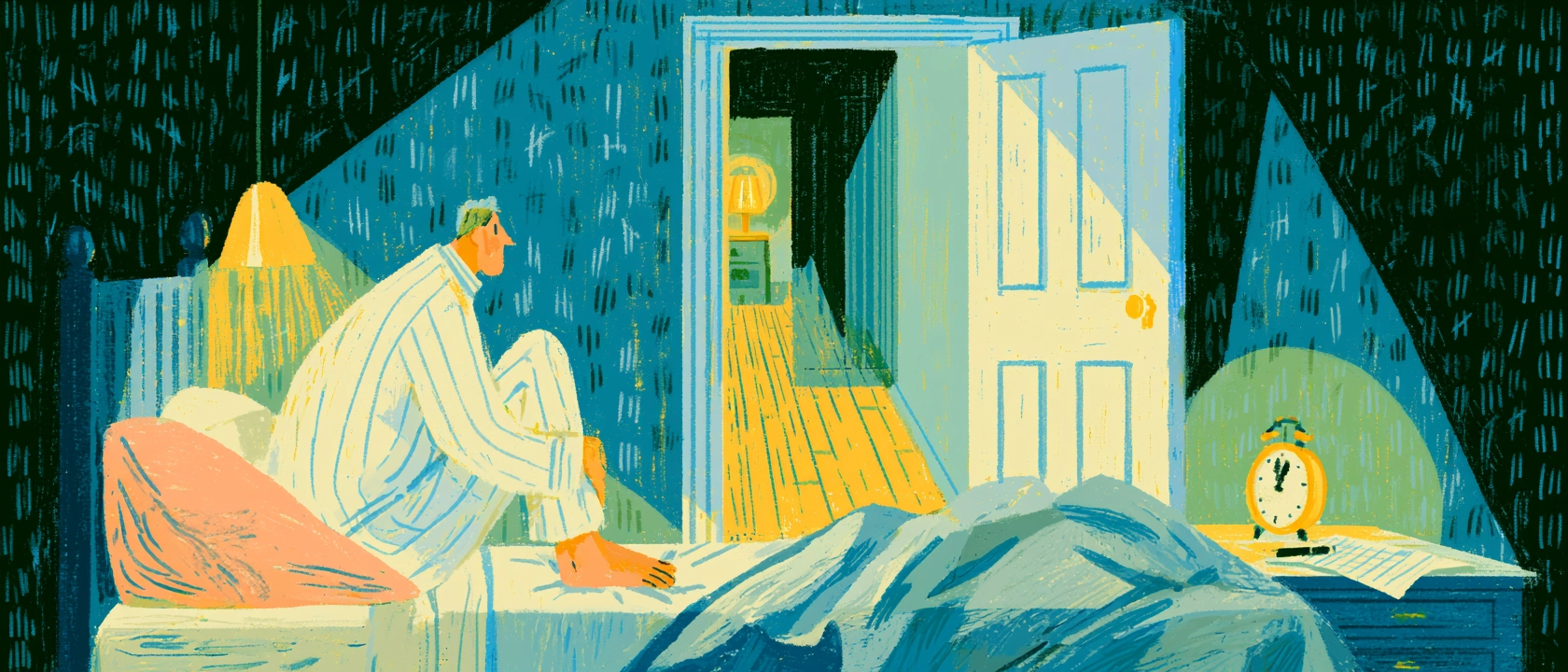
If you're reading this, part of you has already answered the question. Parents don't search this phrase on a good day. They search it after weeks of watching something, wondering whether it's a phase, and hearing "they'll grow out of it" one too many times to keep believing it.
This guide gives you a clearer test than "serious enough." And if you're wondering what would even happen at a first appointment, we've written a full walkthrough of your child's first therapy session to read alongside this one.
When should a child start therapy? Whenever emotional or behavioral changes persist beyond a couple of weeks and interfere with sleep, school, friendships, or life at home. Children as young as three can benefit through play-based therapy. Roughly 1 in 5 U.S. children has a diagnosable mental, emotional, or behavioral condition, and early support shortens the course.
Earlier than most families think, and for smaller reasons than most families think.
Karla often compares a child's struggle to a sprained ankle. Walk on a fresh sprain and the body compensates: the gait shifts, other muscles overwork, and a month later the problem has spread past the ankle. Kids do the same thing with feelings they can't carry. They compensate, by avoiding, masking, melting down, or going silent, and the compensation slowly becomes the pattern.
Therapy works like treating the sprain while it's still just a sprain. Age matters less than parents expect: children as young as three or four do real work through play, and the American Psychological Association notes that early intervention improves emotional resilience and long-term outcomes. The question that matters is whether something is interfering with your child's ability to feel safe, connected, or regulated.
One rough week means your child is a person. A pattern is what you're watching for. In our work with families at Layers, these are the patterns that most often turn out to matter:
One more sign hides in plain sight: the child who's "fine at school." Teachers report an angel; you get the explosion at 3:45. The split is misleading. Holding it together all day takes enormous effort, and home is where the effort runs out, because kids save their hardest feelings for the place they feel safest. The after-school collapse is information, and it counts. In autistic girls especially, that same pattern often turns out to be masking rather than moodiness.
Most families who call us say some version of the same sentence: "We weren't sure it was serious enough." The waiting made sense to them. Therapy felt like a big intervention, so they saved it for a big problem.
That instinct is backwards, and it deserves to be retired.
Therapy is shortest and easiest exactly when the problem still feels too small to justify it.
A six-week-old worry pattern is a conversation. A three-year-old worry pattern is a renovation. Kids build their identities around whatever they practice, so a struggle left alone gets rehearsed into "that's just how I am." Waiting for serious enough usually means arriving after the sprain has changed the whole gait.
There is no gatekeeper checking whether your family has suffered sufficiently. An evaluation appointment is allowed to end with "this looks developmentally normal, here's what to watch." That outcome is a win, and it happens regularly.
Some things do resolve on their own. That's true, and it's what makes waiting so tempting. The trouble is that from the outside, a passing storm and a settling-in pattern look identical for the first few weeks. The two-week-and-spreading test exists because that's the point where "wait" stops being the smart default.
Untreated struggles tend to compound. The Centers for Disease Control and Prevention (CDC) notes that unaddressed childhood mental health concerns affect long-term academic and emotional outcomes, and the day-to-day version of that research looks like this: avoidance gets bigger, the family reorganizes around the struggle, and a child starts explaining it with "something is wrong with me." Compensation becomes the pattern. The sprain becomes the walk.
At our Plano practice, therapy meets your child at their developmental level. For younger kids that means play therapy, expressive arts, and games, a child's native language for processing what they can't yet say. For older kids and teens it shifts toward conversation, skill-building, and trauma-informed approaches when the history calls for them.
Parents are inside the process, never outside it. You'll get regular check-ins, concrete tools for the hard moments at home, and a partner in reading what the behavior is communicating. If you want the session-by-session picture, what actually happens in your child's first therapy session walks through the whole arc, from intake paperwork to the first signs of change.
As young as three or four. Play-based therapy is built for children who don't yet have the vocabulary for their feelings, which is most of them. The format changes with age; the benefit doesn't wait for adolescence.
Track two things for two weeks: duration and spread. A phase fades and stays contained. A pattern persists, shows up in new settings, and starts collecting costs, from sleep to school to friendships to family peace. If you've been tracking for a month and still asking, that's your answer.
Common, and workable. For younger kids, framing matters more than consent. Offer a room full of games and a grown-up who helps with big feelings. For older kids and teens, resistance is something therapists handle every week, and work can begin with parents alone, since changing how the household responds often moves a stuck kid more than dragging them to an office ever would.
It's a reasonable first stop, especially when physical symptoms are in the mix, since ruling out medical causes matters. But you don't need a referral or a diagnosis to call a therapist directly. If your gut says the problem is emotional, you're allowed to start there.
If you or someone you love is in crisis:
Layers Counseling Specialists provides child therapy in Plano, Texas, serving families across the DFW area. If you've been asking when a child should start therapy, the honest answer is usually: around the time a parent starts asking. Request an appointment here.
You answered the question before you searched it. What you wanted was a second opinion. Consider this that, and consider the sprain worth treating while it's still just a sprain.
This article is for educational purposes and is not a substitute for professional medical advice. If you or someone you know is in crisis, call or text 988 (Suicide & Crisis Lifeline) or text HOME to 741741.
Our Plano therapists specialize in OCD, anxiety, ADHD, autism, ARFID and trauma, in person or online anywhere in Texas. Every clinician starts with a free 15-minute consultation, so you can see whether it feels like a fit before you commit.
child-therapy