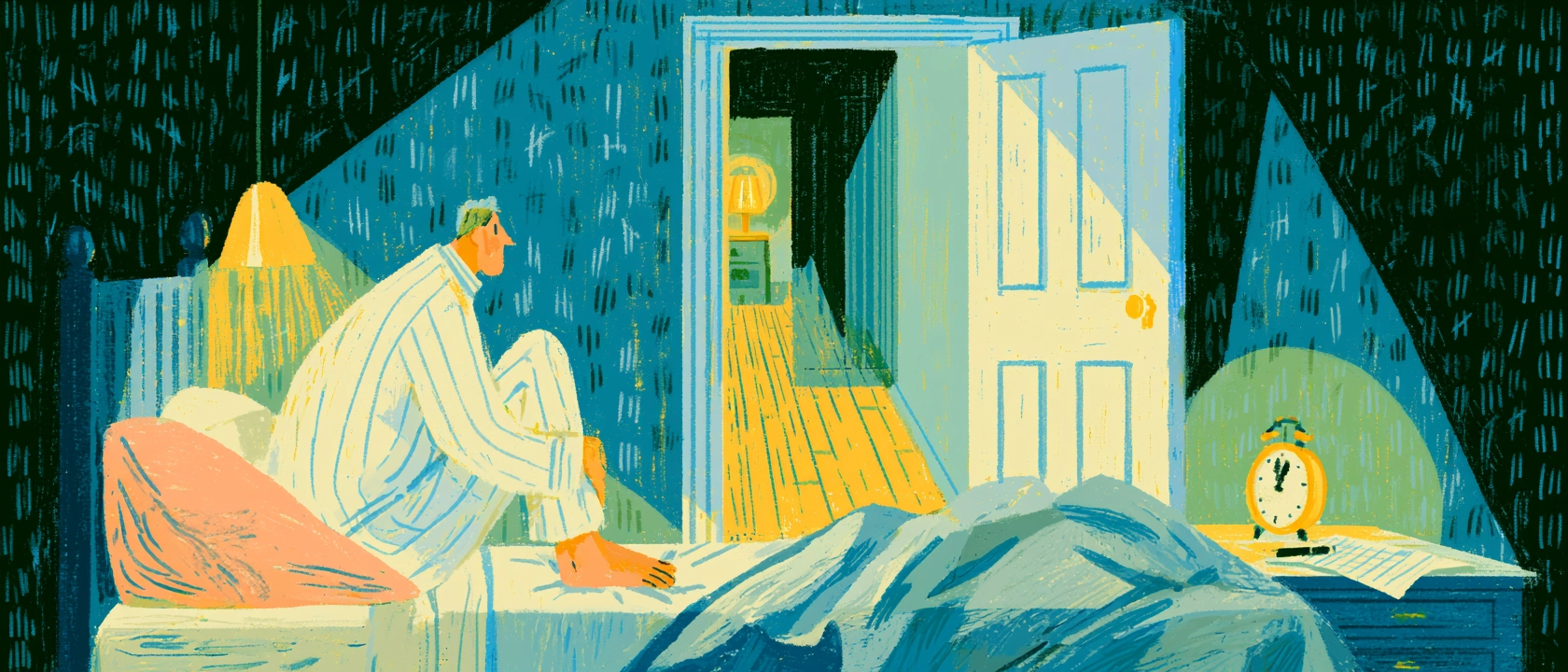
Your teenager slammed their door again. Or they barely spoke at dinner. Or they snapped at you over nothing and then dissolved into tears, and by the time you figured out what to say, they were already in their room with headphones on.
And you're standing in the hallway wondering: is this normal? Or is something actually wrong?
Most parents of teenagers live in this question. The honest answer is that teen moodiness and teen depression can look nearly identical from the outside, and the difference is easy to miss until things have gotten harder than they needed to be.
This post is a guide to telling them apart. Not to alarm you, and not to dismiss what you're seeing. To help you look clearly at what's happening with your kid.
First: adolescent moodiness is real, it's neurological, and it's not just an excuse. The teenage brain is undergoing the most significant remodeling it will ever experience: the prefrontal cortex, which regulates impulse control, emotional regulation, and long-term thinking, isn't fully developed until the mid-twenties. Teenagers are running adult-level emotions on hardware that isn't finished yet.
The American Academy of Child and Adolescent Psychiatry is clear that emotional intensity, conflict with parents, increased need for privacy, and fluctuating self-esteem are all developmentally expected in adolescence. All of it is the brain doing exactly what it's supposed to do at this stage.
Normal teen moodiness tends to have a few specific characteristics:
If what you're describing mostly fits this picture, that's meaningful. Keep paying attention, but you're most likely watching normal development unfold.
Depression in teenagers is common, and commonly missed. According to the National Institute of Mental Health, approximately 1 in 5 adolescents will experience a depressive episode before adulthood. Most won't get treatment.
Part of why it goes unrecognized: teen depression doesn't always look like adult depression. It doesn't always look like sadness. Often it looks like this:
This is the one parents most often misread. In adults, depression tends to show as sadness, low energy, hopelessness. In teenagers, the primary presentation is often irritability: a constant low-grade anger, a hair-trigger, a sense that everything and everyone is intolerable. If your teenager seems angry all the time, not just sometimes, that's worth paying attention to.
Teens need more space than children do. That's normal. But there's a difference between needing privacy and disappearing. When a teenager stops seeing friends for no particular reason, just because they don't bother anymore, when they quit the activities they used to love, when they stop reaching out and stop responding, that's withdrawal, and it's a red flag.
This is what parents describe most often when looking back: a kind of fading. The things that used to light them up stopped mattering. Their humor went quiet. They seemed far away even when they were right in front of you. Clinicians call this anhedonia, the inability to feel pleasure, and it's one of the clearest markers of clinical depression.
Teenagers need more sleep than adults. But sleeping until 2pm every day and then still being exhausted, or lying awake until 4am unable to settle: that pattern deserves attention. Sleep disruption is one of the most consistent biological signals of depression. Changes in appetite, unexplained physical complaints, a general physical heaviness: these matter too.
Grades dropping when they didn't used to. Missing deadlines they previously would have caught. Forgetting things. Losing track. Concentration and executive function are among the first casualties of depression, and they show up clearly in academic performance before many other signs become visible.
Anything that sounds like hopelessness ("what's the point," "I don't care anymore," "things are never going to get better") should be taken seriously. Teens sometimes express these things dramatically in the heat of the moment and mean little by them. But when the sentiment is consistent, when it comes up outside of arguments, when there's a flatness to it rather than heat, listen carefully.
If your teen says anything that suggests they've thought about harming themselves or don't want to be alive, take it seriously immediately. Don't argue, don't minimize, don't wait. Call or text 988 or reach out to a mental health professional the same day.
The parents who catch it early almost always say the same thing: "I knew something was off. I just kept hoping it would pass." Trust that instinct. If something feels wrong, it's worth a conversation with someone who can help you look clearly.
Teen moodiness vs possible depression at a glance
| Normal teen moodiness | Possible depression | |
|---|---|---|
| Where it comes from | Follows something you can trace: a fight, a bad grade, a rejection | Often no clear trigger, and it doesn't lift when things improve |
| How long it lasts | Passes; they still laugh and get absorbed in things | Most of the day, nearly every day, for two weeks or more |
| Where it shows up | One area of life, like home or school | Everywhere at once |
| Irritability | Sometimes, in the heat of a moment | Constant, low-grade, hair-trigger |
| Friends and activities | Wants more privacy but still connects | Stops seeing friends and quits what they loved |
| Who they are | Still recognizably themselves | A fading: their humor goes quiet and things stop mattering |
The clinical threshold for a depressive episode is symptoms most of the day, nearly every day, for at least two weeks. That's a useful baseline: it separates clinical depression from a rough week.
But parents sometimes take this to mean: wait two weeks and see. That's not quite right either. If you're already asking the question, if your gut is telling you something has changed, don't use the two-week rule as a reason to delay. Use it as a framework for what you're observing while you start the conversation.
A therapist can assess what you're describing and tell you whether it rises to the level of clinical intervention or whether watchful support is the right call. That assessment is always worth getting.
Depression isn't the only thing that can look like moodiness turned up too high. A few other possibilities worth knowing about:
Anxiety in teenagers often manifests as irritability, avoidance, and withdrawal: the same picture as depression, different driver. Anxious teens frequently look angry because anxiety that has nowhere to go often converts to frustration and rage.
Trauma responses can look like personality change, emotional shutdown, hypervigilance, or explosive reactions. If something significant happened (a loss, a difficult relationship, exposure to something overwhelming) and the shift in your teenager followed that event, trauma is worth considering. Our post on how trauma shows up in teenagers' bodies covers this in detail.
Attention-deficit/hyperactivity disorder (ADHD) and learning differences can produce academic decline, frustration, emotional dysregulation, and low self-esteem that looks like depression, especially in teens who've been undiagnosed and have spent years working harder than their peers just to keep up.
Neurodivergence and masking burnout, particularly in autistic teens and teens with AuDHD, can produce a collapse that looks like depression. If your teenager has always seemed to be working harder than others to fit in, and the breakdown came after an extended period of high demands, burnout is worth exploring.
Getting the right diagnosis matters because the treatment is different. A skilled therapist will assess carefully rather than assuming the first obvious answer.
This part matters. A lot of parents see the signs and then don't know how to open the door without getting it slammed in their face.
A few things that actually help:
Lead with what you've observed. "I've noticed you seem really tired lately, and you haven't been hanging out with your friends as much" lands differently than "I think you might be depressed." The first invites. The second puts teenagers on the defensive.
Ask and then be quiet. "What's going on for you lately?" followed by silence (actual silence, long enough to feel a little awkward) gives teenagers room to fill. They often do, eventually, if you wait.
Don't rush to fix it. The instinct is to reassure, to problem-solve, to make it better. Teenagers often experience this as dismissal. "That sounds really hard" is often more connecting than any solution you could offer.
Come back. If the first conversation goes nowhere, try again. In the car. Before bed. Without eye contact sometimes. Teenagers often talk more easily when they're not being looked at directly. The door doesn't have to open on the first knock.
Name that therapy is normal. If you're considering getting your teenager professional support, how you introduce it matters. "A lot of people talk to therapists. It's basically having a person whose whole job is to help you figure out what's going on" removes some of the stigma. So does letting them have input: which therapist, what kind of setting, whether you're in the room for any of it.
Teenagers are not smaller adults, and therapy for them shouldn't be either. Good adolescent therapy is developmentally attuned: it meets teenagers where they actually are.
At Layers Counseling Specialists, Isaac Rosas, LMSW works with adolescents dealing with depression, anxiety, grief, and trauma. The approach is collaborative: Isaac doesn't lecture teenagers about their feelings. He works to understand how they make sense of their own experience, and builds from there.
Sessions are typically 50 minutes. Parents are involved in a way that protects the teenager's trust in the therapeutic relationship while keeping you informed about themes and progress. Most teenagers who are genuinely struggling, and who have a therapist they connect with, see meaningful improvement within the first few months of consistent work. Some need longer. The work is individual.
For parents wondering what the early weeks of child or teen therapy look like in practice, this post on what to expect when your child starts therapy walks through it in detail.
Teen depression doesn't usually resolve on its own without intervention. Left untreated, depressive episodes in adolescence tend to lengthen, deepen, and recur. Academic consequences compound. Social withdrawal narrows the relationships that might otherwise provide support. The teenager who seemed like they might snap out of it by summer often arrives at fall in a harder place than where they started.
Early intervention matters because the nervous system is more responsive earlier. The patterns that make depression feel permanent are more recent, less entrenched, and more accessible when you get to them before they've been running for years.
Start by understanding the resistance. Is it stigma? Fear of what they might have to talk about? A sense that nothing will help? Each of those has a different response. Sometimes reframing helps: therapy as a place to figure things out rather than a place for people who are broken. Sometimes offering them some control (choosing between therapists, choosing the day/time) reduces the resistance. And sometimes the most honest thing to say is: "I'm not asking you to love it. I'm asking you to try it a few times and see." Most teenagers who start therapy, even reluctantly, are glad they did within the first few weeks.
Heavy social media use and depression in teenagers are genuinely correlated, and the evidence has gotten stronger in recent years. But correlation isn't causation in either direction: depression often increases social media use (because a teenager who has withdrawn from real life turns to screens), and excessive screen time can also worsen mood. Taking the phone away without addressing the underlying issues often increases conflict without improving the depression. A therapist can help you think through what role screens are playing specifically for your teenager and what a reasonable approach looks like.
Yes. Frequently. High-achieving teenagers sometimes maintain performance even in the middle of significant depression: their grades don't slip because the fear of failing is what's keeping them going. The internal experience doesn't show on the outside. These teenagers are often the last ones parents suspect because the visible indicators look fine. But the cost of maintaining that performance while depressed is enormous, and eventually something gives.
Yes, in important ways. Teenagers are more likely to present with irritability than sadness as the primary mood disturbance. They're more reactive: their mood shifts more quickly in response to events, which can make it look less serious than it is. They're also more responsive to treatment than adults with longer-standing depression, which is one more argument for early intervention.
Any direct statement about wanting to die, not wanting to be here, or harming themselves should be taken seriously and assessed by a professional immediately. Beyond direct statements, watch for: giving away possessions, sudden calm after a period of depression (sometimes a sign of having made a decision), increased risk-taking, researching methods, or saying goodbye in a way that feels final. If you're concerned, call or text 988 and ask for guidance. You don't have to be certain to ask for help.
Parents know their teenagers better than anyone else does. When something has shifted, you feel it before you can name it. That instinct is worth trusting.
You don't need certainty to reach out. You don't need a diagnosis, a checklist fully checked, or proof that it's "bad enough." If you're worried, that's enough.
Layers Counseling Specialists offers adolescent therapy in Plano, Texas, serving families across the DFW area including Frisco, Allen, McKinney, and Richardson. Our child and teen therapy is trauma-informed, developmentally appropriate, and built around what actually helps teenagers.
Schedule a consultation. We'll help you figure out what your teenager needs and whether we're the right fit to provide it.
If your teen is in crisis right now: Call or text 988 (Suicide & Crisis Lifeline). Text HOME to 741741 (Crisis Text Line). You don't have to wait.
This article was written by Karla Pineda, LPC, Executive Director of Layers Counseling Specialists. Karla works with teens and adults, with a clinical focus on obsessive-compulsive disorder (OCD) and anxiety.
Last reviewed: August 2026
This article is for educational purposes and is not a substitute for professional mental health care. If you or someone you know is in crisis, call or text 988 (Suicide & Crisis Lifeline) or text HOME to 741741.
Our Plano therapists specialize in OCD, anxiety, ADHD, autism, ARFID and trauma, in person or online anywhere in Texas. Every clinician starts with a free 15-minute consultation, so you can see whether it feels like a fit before you commit.
child-therapy
Child & Teen Trauma
child-trauma-therapy